How Rising Cocoa Prices Hit Manufacturers Like Pladis
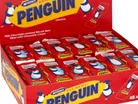
Soaring cocoa prices and unstable supply chains are forcing food manufacturers to reformulate iconic products.
Pladis, the owner of McVitie’s, has altered the coating on its Penguin and Club bars, meaning the snacks no longer qualify as chocolate under UK food regulations.
The change highlights a broader trend of procurement teams adapting to significant cost pressures driven by a fragile global cocoa supply.
Volatility in the cocoa supply chain
The UK's reliance on a concentrated geographic area for cocoa sourcing is a point of weakness in its supply chain.
More than half of the UK's cocoa beans originate from the Ivory Coast and Ghana.
These West African nations have recently faced a sequence of extreme weather events that have disrupted cocoa production.
In 2023, heavy rainfall, which was more than double the 30-year regional average, led to the spread of black pod disease, rotting the cocoa pods before harvest. This was followed in early 2024 by a severe drought period intensified by El Niño.
According to scientists at World Weather Attribution, the subsequent heatwave was made 10 times more likely and 4°C hotter because of climate change.

The cumulative effect of these conditions is that farmers have struggled to produce and harvest crops reliably.
This has resulted in a shortfall in supply and a sharp increase in prices. In the wider market, cocoa prices in 2025 remain three times higher than they were in 2022.
The UK has been particularly affected, with imports falling by 10% over two years while prices have risen by 20%.
Procurement adjustments and product reformulation
In response to this market reality, the procurement team at Pladis, which also owns Godiva, Go Ahead and Jacobs, has made strategic changes.
Mario Reis, Chief Supply Chain Officer at Pladis, is responsible for overseeing such global risks.
To manage costs, the company has reformulated the coating on its Penguin and Club bars. Cheaper, more price-stable fats such as palm oil and shea oil have been substituted for cocoa butter and cocoa solids.
These alternative ingredients are sourced from different regions, often in Southeast Asia and West Africa, diversifying the supply base.
This reformulation has direct regulatory implications. UK food standards stipulate that a product must contain a minimum of 20% cocoa solids to be legally marketed as “milk chocolate”.
The new coating for Penguin and Club bars falls below this threshold. Consequently, the products must now be labelled as “chocolate flavour”.
Pladis confirmed the adjustment, stating: “We made some changes to McVitie's Penguin and Club earlier this year where we are using a chocolate flavour coating with cocoa mass rather than a chocolate coating.”
Navigating inflation and consumer perceptions
The pressure on manufacturers is occurring within a wider inflationary environment.
Figures from the Office for National Statistics (ONS) show that, as of March 2025, food inflation is at 3.1% but chocolate-specific inflation has reached nearly 17%.
This places manufacturers in a difficult position as they attempt to absorb rising input costs without alienating consumers who are themselves dealing with a higher cost of living.
Pladis insists the sensory experience of its products remains unchanged.
“Sensory testing with consumers shows the new coatings deliver the same great taste as the originals”, the company says.
However, the alteration to such well-known products is significant. The slogan on Club bars, "If you like a lot of chocolate on your biscuit, join our club”, is now a relic of a previous product formulation.
The underlying change that the product no longer meets the established threshold for chocolate is a fact that consumers may notice and act upon, regardless of taste parity.
This could be a leading indicator of wider shifts in the food and beverage industry as other manufacturers may be forced to make similar decisions in the face of sustained supply chain volatility.