Danone Ups Local Sourcing in UK Alpro Oat Milk Production
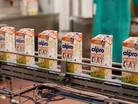
Danone’s US$51m investment in its Alpro facility in Kettering, UK, marks a move to fully local sourcing for its oat milk in a green production upgrade.
With 100% of its oats now coming from British farms, Danone is aligning its manufacturing and sustainability strategy.
According to research from Oxford University, oat milk already comes with a lower environmental cost than cow’s milk, using less water and generating fewer greenhouse gas emissions.
Now Alpro, owned by Danone, is pushing these environmental benefits even further by switching to domestic oats and updating its production process to use less energy and water.

A local mill and fewer food miles
The oats used in Alpro’s sugar-free oat drink now come mostly from within 80 miles of the Navara Oat Mill, located near the Kettering factory. The proximity not only keeps supply chains short but also cuts food miles and lowers emissions tied to transport.
“Reducing our impact on nature is a key part of our Danone Impact Journey, so it’s really encouraging to see the real-world benefits of our move to local sourcing and new recipes,” says Hannah Cornick, Head of Sustainability and Social Innovation at Danone UK & Ireland.
“Whilst our oat drinks already provided shoppers with a lower-carbon option, we’re pleased our recent actions have reduced this environmental impact even further. Our shift to 100% British Oats, combined with a new production process that requires less energy and less water, has been a valuable investment that ultimately allows us to deliver a healthy, tasty product to our customers in a more sustainable way.
“We continue to innovate and look for ways we can reduce our impact so we can deliver more for people and the planet.”
Alpro’s move to British oats and its revised production method has already delivered:
- 25% lower carbon footprint
- 20% reduction in land use
- 70% reduction in water use (across the product lifecycle)
The figures are based on a lifecycle assessment of the UK’s previous 1-litre Oat Original and No Sugars recipes, conducted by environmental data company Foodsteps. Altogether, the changes are expected to prevent around 6,000 tonnes of CO2 emissions in 2025.
“Until now, only 1% of oat drink on the market has been guaranteed to be from British crops,” says Mark Bristow, Quality and Food Safety Director at Danone. “Our move to local sourcing will significantly increase the number of homegrown options for shoppers.”
Ingredients and environmental claims
The current recipe for Alpro’s no sugar oat drink in the UK includes:
- Water
- Oats
- Sunflower oil
- Soluble corn fibre
- Calcium
- Sea salt
- Stabiliser (gellan gum)
- Potassium iodide
- Vitamins B2 and D2
Alpro highlights that the drink is naturally lactose free, low in fat, has no added sugars and provides a source of fibre, calcium and vitamin D.
While these benefits have been part of the product’s consumer appeal, Danone’s focus is now firmly on refining the production process to reduce its environmental footprint.
How else is Danone embracing sustainability?
Beyond oat milk, Danone is applying similar sustainability principles elsewhere in its operations. The company is working with dairy suppliers to cut on-farm emissions by up to 50% by 2030. In the US, this includes using BioFiltro’s wastewater treatment system on dairy farms in California.
Danone is also expanding its digital health work, entering the next phase of investment in its Digital Lab in Singapore. This initiative is designed to boost data analytics and AI-led nutrition solutions, with the aim of improving health outcomes globally.
One of its health-led projects is “Iron Up!”, a programme focused on tackling iron deficiency anaemia in young children. The campaign builds on existing work that has reached over 1.5 million children through screening.
“At Danone we are convinced nutrition can make a positive, proven difference to health especially in those early years,” says Katrien Van Laere, Senior Vice-President R&I Chief Scientific and Medical Officer at Danone.
“For years, we have been committed to addressing iron deficiency anaemia contributing to the screening of over 1.5 million children to date. With Iron Up! we are scaling our impact by combining science-based innovation, deep nutritional expertise, and strong partnerships to reach more children and help them thrive.”