Major Manufacturers Linked to Half of Global Plastic Waste
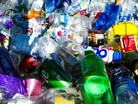
Plastic pollution is one of the most enduring and challenging environmental problems, with global production exceeding 400 million tonnes each year.
A comprehensive study published in Science Advances by Cowger et al. analyses five years of data collected across 84 countries, revealing how corporate producers are central to the problem.
The peer-reviewed study connects the growing volume of plastic waste, associated chemicals and by-products directly with large-scale manufacturing operations.
Corporate origins of global plastic waste
Between 2018 and 2022, researchers carried out 1,576 brand audit events across 84 countries, identifying close to 1.9 million individual plastic items.
Of these, 909,771 items are traceable to specific brands. The data points to concentration of responsibility: 13 companies are each accountable for more than 1% of all branded plastic items, with five alone making up 24% of all branded waste found globally.
The Coca-Cola Company is the largest contributor, responsible for 11% of the total. PepsiCo follows with 5%, then Nestlé and Danone at 3% each and Altria at 2%.
These figures underscore a strong correlation between global production volumes and environmental impact, particularly in the food and beverage sector.
The study highlights that 56 companies are behind more than half of all branded plastic waste recorded worldwide.
Their products are widely used and often consumed rapidly, leading to a high prevalence of single-use packaging in public spaces. This includes on-the-go items that are more likely to end up as litter than be properly managed through recycling systems.
Pollution linked to production growth
The research reveals a direct relationship between the amount of plastic a company produces and the volume of its branded waste found polluting environments.
This pattern holds true across geographic regions and regardless of local waste management infrastructure, signalling that the root problem lies in the scale of production itself.
Companies that produce more plastic see more of their branded waste appearing in the natural environment, regardless of their recycling or waste reduction schemes.
The statistical consistency challenges claims of corporate progress made through voluntary environmental programmes and points instead to the need for reducing overall plastic production.
The Coca-Cola Company emerges as the single largest polluter, responsible for 11% of all branded plastic identified in the global audit.
"We remain committed to building long-term business resilience and earning our social license to operate through our evolved voluntary environmental goals," says Bea Perez, Executive Vice President and Global Chief Communications, Sustainability & Strategic Partnerships Officer at The Coca‑Cola Company.
Dusan Stojankic, VP Franchise Operations, GB&I at Coca‑Cola Great Britain, explains: “Going label-less might seem like a small step, but it is one of several ways we are exploring making recycling easier, minimising waste and minimising the impact of our packaging on the environment.”
Javier Meza, President, Marketing & Europe CMO, Coca‑Cola Europe, adds: “This trial could contribute to longer-term changes to the way brands communicate with their consumers.”
PepsiCo ranks second in the global branded plastic footprint at 5%.
Its well-known product lines, including Lay’s, 7UP and Quaker, are consistently found in waste streams around the world.
Chairman and CEO Ramon Laguarta states: "As circumstances evolve, PepsiCo continually adapts how we source ingredients; make, move and sell our products; and inspire people through our brands."
The company’s environmental strategy, called pep+, seeks to transform its entire value chain. Still, the scale of PepsiCo’s packaging output suggests the need for more decisive interventions to reduce its plastic footprint.
Nestlé, Danone and Altria each contribute 2–3% of the total branded plastic waste.
Their presence in the findings aligns with their core industries of food, beverage and tobacco – all sectors heavily reliant on short-use packaging. Other companies listed among the top polluters include Mayora Indah, Mondelez International, Mars Incorporated, Salim Group and British American Tobacco.
Regulation, not pledges, needed
The study concludes that voluntary sustainability efforts have not produced the necessary changes.
Instead, it calls for a shift in regulation that directly addresses production practices. Key proposals include:
- Transparent reporting: An international, open-access database requiring companies to disclose details on packaging output and environmental impact.
- Design standards: Mandatory labelling practices to enable easier identification of plastic sources, even after degradation.
- Production limits: Reducing the creation of single-use plastics is presented as the most effective pollution mitigation strategy.
- Extended Producer Responsibility (EPR): Binding policies to ensure producers contribute to cleanup and recovery costs.
Bea summarises the broader need for change: “We know we will have more chapters in our journey and that we can’t do it alone.
“Continued collaboration, targeted investments and well-designed policies are crucial to help create shared value for all.”
The Cowger et al. report offers one of the most detailed datasets linking plastic production to pollution. Its findings name specific corporate contributors and quantify their impact, giving policymakers and the public a tool to press for regulation that limits production rather than relying on corporate promises.