
EU Defence: Mercedes-Benz Signs MoU with TYTAN Technologies
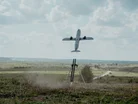
Mercedes-Benz is expanding into the European air defence industry in partnership with TYTAN Technologies. The companies signed an Memorandum of Understanding (MoU) at at ILA 2026 on 10 June 2026.
TYTAN, which is headquartered in Germany, is a startup focussed on building what is calls “AI-powered counter-drone systems”.
This is not the first European carmaker reported to be considering a move into the defence industry, with Volkswagen reportedly in talks earlier this year with Rafael Advanced Defence Systems to switch production from one of its manufacturing sites in Germany from cars to missile defence components.
European carmakers are operating in a challenging environment, with many facing write-downs from EVs, heavy costs from US tariffs and greater pressure from Chinese rivals who are expanding into Europe.
Mercedes and TYTAN
Mercedes signed an MOU with the Munich-based defence startup TYTAN at ILA 2026 (an International Aerospace Exhibition).
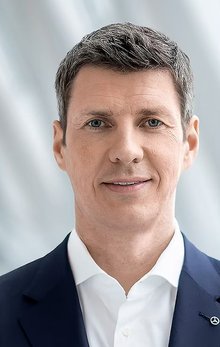
Mercedes confirmed that Michael Schiebe, Member of the Board of Management of Mercedes-Benz Group AG, responsible for Production, Quality & Supply Chain Management and Balázs Nagy, CEO and Co-Founder of TYTAN Technologies had concluded the agreement at the exhibition.
In comments released by Mercedes, which have been translated from German, Michael says: “With the Memorandum of Understanding with TYTAN Technologies, we are combining our respective strengths: Mercedes-Benz stands, now and in the future, for robust and reliable base vehicles, while TYTAN stands for highly specialised expertise in drone, sensor and mission technology.
"Together, we want to work on innovative solutions for security and protection tasks. For Mercedes-Benz, expanding our long-standing expertise in the defence sector is a strategic area of development.”
The move was first reported by the Financial Times who said that Mercedes will provide vehicles for a mobile air-defence system to target small first-person view drones. The system, named Drone Defender, would use Mercedes’ Sprinter van and a military version of the carmaker’s G-Class SUV.
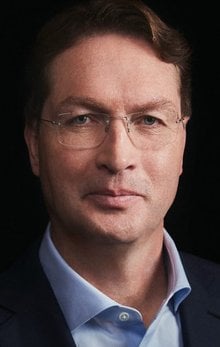
In May of this year, Mercedes CEO Ola Källenius told the Wall Street Journal that the carmaker was willing to enter defence production: “The world has become a more unpredictable place and I think it is absolutely clear that Europe needs to increase its defence profile.
“Should we be able to play a positive role in that, we would be willing to do so."
In a press release that has been translated from German, Mercedes added the companies' aim is to combine both areas of expertise in selected projects and to "systematically evaluate potential applications for modular, vehicle-integrated solutions."
What is TYTAN?
Since its founding in 2023, TYTAN has operated actively in Ukraine and secured multiple government contracts, including procurement agreements to deliver thousands of METIS interceptor drones to armed forces.
TYTAN says its “AI-powered interceptors detect, track and neutralise targets in real time". The single human operator is leveraged to enable multi-drone operations while retaining "full control”.
Remarking on the recent deal with Mercedes, in comments that have been translated from German, Balázs Nagy, CEO and Co-Founder of TYTAN Technologies, says: “The threat is real; every day we witness overflights of critical infrastructure in Germany and Europe. Agility and interoperability are no longer aspirations, they are necessities.
"With Mercedes-Benz, we have found a partner that brings world-class industrial excellence and institutional expertise. TYTAN Technologies contributes operational expertise and technical competence in autonomous air defence and counter-UAS systems. Together, we are creating a platform architecture that effectively protects against unmanned threats, not in 2029, but today.”
The company has been funded by the NATO Innovation Fund and Armira.
On its website, the company states its mission is to set the global standard in autonomous air defence through interoperable and cost‑efficient systems that counter unmanned aerial threats at scale.

European carmakers expanding into defence
With carmakers facing shrinking profits, some are looking to expanding into Europe’s booming defence industry.
Mercedes is not the only German carmaker to be weighing a move into the defence industry. Volkswagen, earlier this year, was reportedly in talks with Rafael, one of Israel's main partners for its Iron Dome system, to switch production from one of its manufacturing sites in Germany from cars to missile defence components.
In April of this year, Reuters reported that two people familiar with the matter said Rafael had signed a letter of intent with Volkswagen to acquire the German automaker's plant in Osnabrueck.
Europe's increased defence spending
The European Parliament says that Russia's ongoing war against Ukraine and changes in US foreign policy have “increased the urgent need for the EU to strengthen its security and defence” and "sped up efforts to reinforce its military capabilities”.
A report from Oxford Economics noted that European investment in defence related manufacturing stagnated substantially between the early 1990s and 2022.
German Federal Minister for Economic Affairs, Katherina Reiche, attended the signing of the MoU between Mercedes and TYTAN, in comments originally released in German, she says: "The current geopolitical challenges make it clear that we need to rethink resilience and security. This makes it all the more important to strategically combine the strengths of our industry.
"I am particularly excited about the planned collaboration between TYTAN Technologies and Mercedes-Benz: Here, the innovative power of a visionary start-up meets the decades of experience and excellence of a long-established industrial company. This partnership impressively demonstrates the potential that arises when bold technological ideas and industrial strength come together.
"Together, both companies are making a significant contribution to further protecting our critical infrastructure and sustainably strengthening Germany's technological sovereignty."
McKinsey says that in recent years, Europe has taken significant steps to strengthen its defence capacity, driven by higher spending, new procurement programmes and a renewed focus on industrial readiness.
The consulting firm estimates that by 2030, Europe’s NATO members will spend EU€800 (US$920bn) on defence, an increase of EU€300bn (US$345bn) from 2025, with equipment spending alone nearly doubling.
Company portals


Executives

Balazs Nagy
CEO
Michael Schiebe
Member of the Board of Management of Mercedes-Benz Group AG. Production, Quality & Supply Chain Management
Ola Källenius
CEO