Hyundai Mobis Bids to Secure Korea’s Automotive Chip Supply

Hyundai Mobis is taking a lead role in tackling the ongoing semiconductor supply issues faced by the global automotive sector.
Through the launch of Auto Semicon Korea (ASK), the company is bringing together 23 partners in a private-sector initiative to build a complete domestic supply chain for automotive-grade chips.
Hosted at the DoubleTree by Hilton Seoul Pangyo, the inaugural ASK event unites fabless firms, foundries, design tool developers, packaging specialists and vehicle manufacturers under one forum.
Major Korean players like Samsung Electronics, LX Semicon and SK keyfoundry are joined by international partners including GlobalFoundries.
The aim is clear: reduce reliance on imported chips and accelerate Korea’s self-reliance in this critical area of mobility technology.
Hyundai Mobis, as both a semiconductor developer and Tier 1 supplier to carmakers, is uniquely positioned to connect upstream chip expertise with downstream vehicle production.
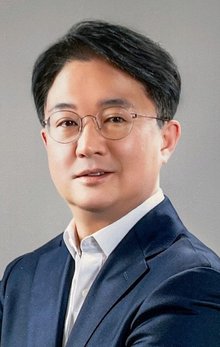
President Lee Gyu-suk says: “We are securing independent semiconductor design capabilities while pursuing joint development with fabless companies and design houses, and expanding cooperation with major foundries.
"We actively encourage companies specialised in home appliances or mobile to enter the mobility sector, and through this, we will take the lead in building the domestic ecosystem.”

Building a localised chip supply chain
ASK is Hyundai Mobis’ response to global disruption in semiconductor availability, which has slowed vehicle production worldwide.
Traditional chipmakers in Europe, Japan and North America have struggled to meet automotive demand. Meanwhile, vehicle electrification and digitalisation continue to drive chip usage per car.
Through ASK, Hyundai Mobis aims to localise core chip production in Korea, shortening the path between concept and commercial deployment.
By bringing more companies into the fold, including those not traditionally involved in automotive, the company believes it can create a resilient and scalable domestic ecosystem.
The ASK forum covers the full chip lifecycle, from design to packaging to integration in vehicles. This end-to-end collaboration is intended to reduce fragmentation in the supply chain and give participants a clearer understanding of what’s required to meet automotive-grade standards, especially around safety and performance.
Lee Gyu-suk confirms the company’s dual role as supply chain integrator and technical validator: “A self-sustaining domestic value chain” is the objective, one where chip suppliers, foundries and automakers work together on shared specifications and coordinated development cycles.
Shortening development cycles from years to months
Hyundai Mobis believes integrated chip development will allow faster response times in a sector where demand shifts rapidly and product cycles are tightening.
Park Chul-hong, EVP and Head of the Semiconductor Business at Hyundai Mobis, explains: “The key to automotive semiconductors lies in optimal integration with the controller.”
“To enhance the differentiated competitiveness of domestic companies, Hyundai Mobis defines controller-specific specifications and supports real-vehicle-based validation, enabling significantly faster development cycles.”
The company says that for electric drive systems, integrated development can reduce semiconductor project timelines by as much as two years.
Hyundai Mobis is currently developing and mass-producing 16 types of chips, ranging from power to data processing. These are fabricated externally, but the designs and validation processes are managed internally, with volumes already hitting 20 million units.
All in-house R&D processes are certified to ISO 26262, the international standard for functional safety in road vehicles.
This allows Hyundai Mobis to share not only designs but also proven quality and safety protocols with partners, many of which are adapting their technology from consumer electronics to mobility applications.
The knowledge-sharing model helps suppliers bridge the gap between mobile and automotive, creating a broader base of domestic chipmakers capable of meeting industry-grade standards.
Preparing for a US$135bn mobility chip market
Hyundai Mobis expects ASK to become an annual event, gradually opening up to startups, trade associations and wider industry groups.
The idea is to build long-term engagement and reduce Korea’s exposure to external chip bottlenecks. As electrification, infotainment, ADAS (advanced driver assistance systems) and connectivity grow in importance, so too does the need for a reliable chip supply.
A global market research firm projects the automotive semiconductor market will reach US$135bn by 2030, growing at 9% annually. Hyundai Mobis estimates that its focus segments will account for 70% of that total and, to capture that opportunity, it wants the domestic supply chain in place – not in theory, but in production.
The ASK forum is designed to align Korea’s major industrial, technology and mobility players in pursuit of that target.
By securing collaboration across design, validation and manufacturing, Hyundai Mobis is setting a template that could reshape how Korea approaches high-tech supply resilience.
In a global market still vulnerable to disruption, the ASK initiative signals a shift from dependency to domestic control, with Hyundai Mobis at the centre.
Company portals

Executives
Chul-Hong Park
Senior Vice President