
Are Manufacturers Ready for AI-Led Autonomous Operations?
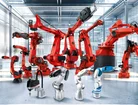
A new study from Tata Consultancy Services (TCS) and Amazon Web Services (AWS) indicates that, while global manufacturers are speeding up their move towards operations led by intelligence, there is a large gap in preparedness.
The Future-Ready Manufacturing Study 2025 provides a data-driven look at how the industry is using digital and data foundations to enable autonomy and future-ready operations.
The research, which included 216 senior leaders from North America and Europe, found a potential disconnect between ambition and reality. According to the study, 75% of leaders anticipate AI will be a top-three contributor to their operating margins by 2026.
However, only 21% of those surveyed stated their organisations possess full AI readiness. This could expose foundational gaps in data integration and system readiness across factories and supply chains.
The study covered a range of sectors, including automotive, industrial machinery, aerospace and defence process industries, chemicals and heavy equipment.

The rise of agentic AI in production
Momentum is building around the concept of next-generation autonomy. Agentic AI, which can facilitate autonomous analysis and decision-making, is expected to take a central role in manufacturing environments.
The study found that 74% of leaders expect AI agents to manage between 11% and 50% of routine production decisions by 2028. This suggests a clear transition towards self-optimising workflows.
"Manufacturing is an industry defined by precision, reliability and the relentless pursuit of performance," explains Anupam Singhal, President of Manufacturing at TCS. "Today, that strength of foundation becomes multifold with AI in orchestrating decisions – delivering transformational business outcomes through greater predictability, stability and control.
"At TCS, we see this as a defining opportunity to help manufacturers build resilient, adaptive and future-ready enterprise ecosystems that can thrive in an era of intelligent autonomy."
Bolstering supply chain resilience
The application of AI extends beyond the factory floor into the wider supply chain. By autonomously analysing market trends, inventory levels and supplier performance, AI can help to optimise purchasing and logistics, potentially reducing delays and associated costs.
According to the research 67% of the leaders surveyed report enhanced real-time supply chain visibility, which strengthens resilience against disruptions.
"Manufacturers today are facing intense pressure: from tight margins to volatile supply chains and workforce gaps," adds Ozgur Tohumcu, General Manager of Automotive and Manufacturing at AWS.
"At AWS, we are transforming manufacturing through AI-powered autonomous operations, moving from manual, reactive processes to intelligent self-optimising systems that operate at scale."
Ozgur notes that the future of the industry is not just about digitalisation but about autonomous operations powered by AI.
He continues: "By embedding artificial intelligence into every layer of the operation and leveraging cloud-native architecture, manufacturers can move beyond simple automation to true autonomous decision-making where systems predict, adapt and act independently with minimal human intervention.
"This study makes it clear: the future of manufacturing is not just digital, it is autonomous – powered by AI that learns, evolves and operates continuously."
Advancing factory-level intelligence
At a factory level, organisations are beginning to see measurable results from integrating AI. The study shows that nearly 40% of organisations are reporting early gains from AI-led quality and planning use cases.
These applications include using AI for predictive maintenance and for real-time quality control inspections. More than 30% of leaders also forecast that substantial productivity gains will come from this AI-led modernisation.
TCS, which supports OEMs and tier-N suppliers, functions as a partner for manufacturers across the value chain. It provides a combination of consulting, IT modernisation and digital manufacturing services to support enterprises.
Through solutions such as TCS Manufacturing AI for Agentic Futures, it enables organisations to become more intelligent and resilient.
However, for these advancements to be realised and scaled effectively, they require stronger data foundations, investment in workforce upskilling and the integration of cloud platforms to support widespread autonomy.
Company portals


Executives

Anupam Singhal
President of Manufacturing

Ozgur Tohumcu
General Manager of Automotive and Manufacturing