Kimberly-Clark's Kenvue Deal Poses Supply Chain Questions

Kimberly-Clark has submitted a US$48.7bn cash and stock deal to acquire Kenvue, pushing two global consumer health brands into one of the largest mergers in the sector.
While the financial structure has gained unanimous board approval and impressed shareholders, the real complexity sits in the supply chain. Both companies operate with expansive logistics systems, regional regulations and manufacturing strategies that now need to align without delay or disruption.
The combined group, expected to reach nearly half the global population, must bring cohesion to parallel procurement networks, different warehousing footprints and contrasting approaches to compliance.
At the centre of this consolidation is a promise to extract US$2.1bn in annual cost synergies within three years through consolidation, manufacturing alignment and logistics streamlining.

Supply chain integration
Kimberly-Clark proposes to pay US$3.50 per share in cash and 0.14625 of its own shares for every Kenvue share, placing the equity value at around US$40.3bn. It values Kenvue – home to Tylenol, Band-Aid and other household names – with the expectation that brand alignment and operational efficiencies will unlock long-term growth.
But behind these numbers are extensive supply chain risks. Each business enters with its own logistics infrastructure and supplier networks. Integration requires merging not only production facilities and supplier contracts but also stock-keeping unit (SKU) systems and transport flows.
Both companies already sit in similar retail categories. In stores, their products line up side by side. But that does not mean their backend systems or warehouse locations mirror each other. The operational effort to consolidate distribution while maintaining service levels will test both supply chain leadership teams.
Kimberly-Clark plans to consolidate production facilities, renegotiate supplier terms and push for shelf dominance. However, execution will be shaped by regulation, risk exposure and consumer trust – especially as Kenvue brings with it complications tied to Tylenol’s brand reputation.
TD Cowen analyst Robert Moskow says: "Kimberly-Clark will take on potential litigation risk for the Tylenol brand... this is hard to quantify."
Regulatory pressure brings complexity
This litigation risk ties directly into logistics and procurement planning. Tylenol and similar products fall under over-the-counter (OTC) drug regulation in many markets. OTC regulation governs how a product is manufactured, packaged, stored and distributed – all the way from ingredient sourcing through to retail point-of-sale. This adds layers of quality control, documentation and traceability not found in typical consumer packaged goods.
As the merged company steps deeper into pharmaceutical-adjacent categories, compliance frameworks must adjust. These include verifying ingredients at source, updating labelling and adjusting storage conditions across geographies. Each misstep in regulatory alignment brings not only legal exposure but potential damage to consumer trust – a central pillar for both businesses.
Kenvue, which spun off from Johnson & Johnson, also arrives with declining Tylenol sales after US President Donald Trump linked its use during pregnancy to autism. US Health and Human Services Secretary Robert F. Kennedy Jr. has acknowledged the data is "very suggestive" but confirmed no conclusive evidence. Nonetheless, consumer confidence has taken a hit and that ripple reaches supply chain and inventory strategy.
Freedom Capital Markets’ Chief Market Strategist Jay Woods refers to the transaction as "buying damaged goods", a clear nod to reputational drag. With legal issues also surrounding talc-based baby powder, the supply chain teams now face scenario planning for product reformulation, possible withdrawal and shelf space reassignment.
Innovation adds pressure to logistics systems
At the same time, both firms have commited to joint investment in research and development (R&D). That means testing new ingredients, updating packaging formats and evolving product lines based on consumer insight and scientific research.
Mike Hsu, Chairman and CEO at Kimberly-Clark, says: "We are excited to bring together two iconic companies to create a global health and wellness leader.
"With a shared commitment to developing science and technology to provide extraordinary care, we will serve billions of consumers across every stage of life."
This innovation ambition requires agile manufacturing systems and responsive logistics. Each new formula or packaging concept can trigger fresh compliance needs, fresh production protocols and changed transport or storage conditions, while legacy systems already stretched by day-to-day operations will need to handle short test runs, new materials and traceability updates without slowing time-to-market.
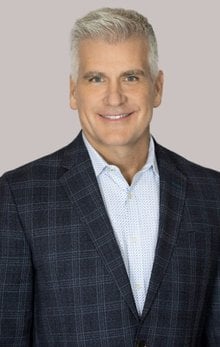
Kirk Perry, Kenvue's newly-appointed CEO, adds: "Together, our combined strengths, expanded capabilities and resources, and broader reach will empower us to innovate even faster and strengthen our category leadership."
Kimberly-Clark expects combined revenues to reach US$32bn annually. That projection assumes integration stays on track. To fund the deal, Kimberly-Clark will use a mix of cash, debt and asset sales – including the divestment of a 51% stake in its International Family Care and Professional business.
Kenvue Board Chair Larry Merlo adds: "Bringing together Kenvue and Kimberly-Clark creates a uniquely positioned global leader in consumer health with a broader range of new growth opportunities ahead."
He calls it "the best path forward for our shareholders and all other stakeholders".
Now, attention shifts to bringing two large-scale supply chains into one working system.
Company portals

Executives
Kirk Perry
Chief Executive Officer and Director at Kenvue
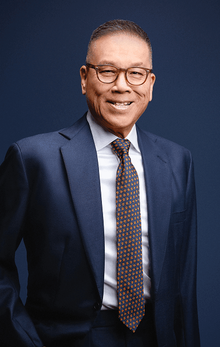
Mike Hsu
CEO