
Trump's Trade Deadlines Stress Manufacturing Supply Chains
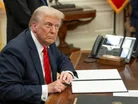
When the administration of US President Donald Trump pledged “90 deals in 90 days,” manufacturers and supply chain professionals worldwide expected disruption and uncertainty.
That timeframe has now expired without even nine deals in place, leaving senior leaders faced with the prospect of managing deepening delays across trade networks.
As of 9 July, the initial 90-day deadline has passed, and a new target of 1 August has been set, with further postponements under discussion.
This adds to an already fragile environment where companies are still adapting to months of shifting US tariff policy. For global supply chains built around the US market, the lack of clarity continues to hinder forward planning.
Uncertainty spreads through US supply chain plans
A survey conducted by US insurance brokerage Gallagher reveals that these uncertainties are a top concern.
Gallagher Chairman and Chief Executive J. Patrick Gallagher says: “Our survey showed supply chain disruptions were a concern to business owners, with 90% reporting they are concerned about the impact of tariffs on their businesses.”
He adds that supply chains, already stretched by geopolitics and extreme weather, are still “vulnerable to disruptions,” prompting firms to look for ways to diversify their supplier base and reduce risk.
US Treasury Secretary Scott Bessent says the administration remains focused on 18 countries that make up 95% of the US trade deficit. These include key trade partners like Japan, South Korea, Germany and Mexico, all essential links in US-led manufacturing and procurement chains.
The administration’s latest letters to these countries rehash terms first presented in April 2025.
The tariff structure, based on trade deficit figures, is used to claim unfair trading by these partners. However, the letters contain no new proposals, leading many manufacturers to question their intent.
The communication has drawn a sharp reaction. At a cabinet task force meeting on 8 July, Japan’s Prime Minister Shigeru Ishiba said Tokyo has “regret that the US government has imposed additional tariffs and announced plans to raise tariff rates.”
Meanwhile, South Korea’s finance ministry says it will monitor the situation and “take immediate and bold action” if markets are destabilised, although no exact actions are announced.
With no firm agreements in place, manufacturers must navigate growing uncertainty across Asia–US supply routes. For importers, the outcome may be rising costs, longer delivery times and production delays.
Inventory build-ups and new sourcing channels
Manufacturers and importers responded to the threat of tariffs with early stockpiling, temporarily raising shipping volumes. But since then, those volumes have fallen.
Chinese exports to the US are down 9.7% this year, reflecting reduced demand and strategic sourcing shifts.
China’s exports have risen in other regions: by 18.9% to Africa, 12.2% to ASEAN nations and 7.4% to the UK. That rebalancing suggests that exporters are adjusting their trade routes to reduce exposure to the US market.

As the effective tariff rate climbs to 15%, compared to 2–4% over the past 40 years, supply chain leaders are moving production, logistics and procurement away from US-linked channels.
Logistics providers are realigning freight lanes, and procurement teams are reviewing suppliers. The strategy for many is clear: reduce vulnerability to US trade actions.
US retailers have warned the administration that tariffs are not just a pricing issue. Shifting sourcing and lengthening lead times increase the cost and complexity of operations.
Treasury Secretary Bessent’s suggestion that a stronger US dollar could offset inflation fails to reassure many, especially as the dollar has dropped around 10% this year.
These changes are pushing up costs on both sides. Importers face higher prices on goods, while domestic manufacturers are spending more on overseas components and materials.
David Zinsner, Chief Financial Officer at Intel, told investors: “The very fluid trade policies in the US and beyond, as well as regulatory risks, have increased the chance of an economic slowdown with the probability of a recession growing.” He adds: “We will certainly see costs increase.”
Tariff warnings for pharmaceutical and tech supply chains
President Trump’s proposal of 200% tariffs on pharmaceuticals has prompted alarm across global health supply chains.
Though no formal measures are yet in place, the idea is to push pharmaceutical production to US territory.

During a 8 July Cabinet meeting, President Trump said: “We're going to give people about a year, a year and a half to come in and, after that, they're going to be tariffed.”
He added: “If they have to bring the pharmaceuticals into the country... they're going to be tariffed at a very, very high rate, like 200%.”
Tariffs on semiconductor imports were also mentioned at the same meeting. With no detailed policy revealed, the manufacturing sector is left to anticipate further disruption.
Jamil Ahmed, Director – Solution Engineering Global Capital Markets at Solace, says data visibility may help mitigate some challenges. “Advanced data analytics combined with a real-time view of every ebb and flow can enhance transparency, which is crucial in the pharmaceutical industry.”
But he acknowledges the complexity: “Managing a global supply chain is difficult and adding the current economic climate into the mix, such as tariffs, and things have become even more challenging.”
Planning gets harder as trade talks stall
Global markets remain steady for now, but supply chains depend on predictability and long-term planning.
A stable week offers little comfort if the outlook remains this volatile.
David Weinberg, Chief Operating Officer at Skechers, sums up the dilemma in a post-earnings call: “The current environment is simply too dynamic from which to plan results with a reasonable assurance of success.”