NVIDIA & Eli Lilly: AI Lab a New Dawn for Drug Manufacturing
NVIDIA and Eli Lilly are creating the “conditions for breakthroughs” by combining to develop a US$1bn AI lab.
The world’s most valuable company and the global pharmaceutical manufacturer are joining forces to bring together a world-leading, multidisciplinary team of scientists, AI researchers and engineers to address the hardest problems in drug discovery.
The co-innovation lab infrastructure will be built on the NVIDIA BioNeMo platform and the NVIDIA Vera Rubin architecture.
The two companies will pioneer robotics and physical AI to accelerate and scale medicine discovery and production.
Combining business strengths
The lab brings together Lilly’s world-leading expertise in discovering, developing and manufacturing medicines with NVIDIA’s leadership in AI, accelerated computing and AI infrastructure.
The two companies will invest up to US$1bn in talent, infrastructure and compute over five years to support the new AI co-innovation lab.
The lab will be based in the San Francisco Bay Area and will see Lilly domain experts in biology, science and medicine working alongside top AI model builders and engineers from NVIDIA.
The companies believe the proximity of expertise will allow them to generate large-scale data and build powerful AI models that can accelerate medicine development, using NVIDIA BioNeMo as the critical platform.

About NVIDIA BioNeMo
NVIDIA BioNeMo Framework is an open source machine learning framework for building and training deep learning models for biopharma.
By accelerating the most expensive and prolonged aspects of AI model development, AI model builders doing biomolecular research with DNA, RNA and protein data can access tools to scale their research.
The platform includes:
- Curated training recipes
- Data loaders
- Pretrained, optimised AI model architecture examples.
They are all domain-specific and accelerated for the best performance, making AI model building faster and simpler.
AI life sciences impact will be ‘profound’
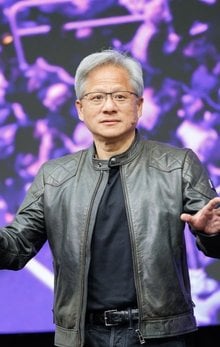
Jensen Huang, founder and CEO of NVIDIA, says: “AI is transforming every industry and its most profound impact will be in life sciences.
“NVIDIA and Lilly are bringing together the best of our industries to invent a new blueprint for drug discovery – one where scientists can explore vast biological and chemical spaces in silico before a single molecule is made.”
“For nearly 150 years, we’ve been working to bring life-changing medicines to patients,” said David Ricks, chair and CEO of Lilly.
“Combining our volume of data and scientific knowledge with NVIDIA’s computational power and model-building expertise could reinvent drug discovery as we know it.
“By bringing together world-class talent in a startup environment, we’re creating the conditions for breakthroughs that neither company could achieve alone.”
Building a continuous learning system for drug discovery
The two companies say the collaboration will focus on “creating a continuous learning system that connects Lilly’s agentic wet labs with computational dry labs, enabling 24/7 AI-assisted experimentation to support biologists and chemists”.
They add: “This scientist-in-the-loop framework aims to enable experiments, data generation and AI model development to continuously inform and improve one another.”
Using “unprecedented compute” for the industry, massive, high-quality data generation and NVIDIA BioNeMo, the teams will focus on building next-generation foundation and frontier models for biology and chemistry.
The initiative expands on Lilly’s previously announced AI supercomputer, which is the most powerful in the pharmaceutical industry.
The companies add: “Beyond drug discovery, NVIDIA and Lilly will explore opportunities to apply AI across clinical development, manufacturing and commercial operations to integrate multimodal models, agentic AI, robotics and digital twins.
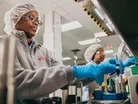
“The use of physical AI and robotics in the AI factory will also help Lilly enhance its capacity to manufacture high-demand medications and strengthen supply chain reliability.”

Executives
Dave Ricks
Chair, CEO
Jensen Huang
Founder and CEO