Nvidia Plans to Manufacture AI Supercomputers Entirely in US
Following the implementation of US President Donald Trump’s new tariffs on imports, technology giants are beginning to respond.
The tech sector has been particularly affected, owing to its heavy reliance on complex global manufacturing networks that span across Asia. Although semiconductors remain exempt for now (as of April 2025), technology firms are increasingly alert to the potential impact.
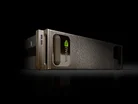
Nvidia has announced plans to manufacture AI supercomputers entirely within the United States for the first time. This initiative is set to accelerate production of its Blackwell chips.
To achieve this, Nvidia has secured over a million square feet of manufacturing space through partnerships with contract manufacturers. These facilities will focus on building and testing Blackwell chips in Arizona and assembling complete AI supercomputing systems in Texas.
The engines of the world's AI infrastructure are being built in the US for the first time.
Collaborating with TSMC
Nvidia has begun producing its next-generation Blackwell AI accelerator chips at Taiwan Semiconductor Manufacturing Company (TSMC) fabrication plants located in Phoenix, Arizona.
At the same time, the company is setting up supercomputer manufacturing facilities in Texas in collaboration with two leading electronics manufacturing services firms – Foxconn and Wistron.
Nvidia is collaborating with Foxconn to build a production facility in Houston, while a separate facility is being established in Dallas with Taiwan-based electronics manufacturer Wistron.
Mass production at both Texas sites is expected to reach full capacity within the next 12 to 15 months.
The manufacturing of AI chips and supercomputers relies on a highly intricate supply chain, involving advanced fabrication, packaging, assembly and testing technologies.
To meet these demands, Nvidia has formed additional partnerships with Amkor and SPIL, two semiconductor packaging and testing specialists, for operations in Arizona.
Nvidia has set ambitious production targets for its US manufacturing efforts. Within four years, the company aims to produce up to half a trillion dollars’ worth of AI infrastructure in the US through its collaborations with TSMC, Foxconn, Wistron, Amkor and SPIL.
These partnerships represent a deepening of Nvidia’s relationships with its suppliers, while expanding their global operations and strengthening the resilience of their supply chains.
Nvidia’s AI supercomputers: the backbone of a new data centre era
Nvidia's AI supercomputers form the computational foundation for a new type of data centre specifically designed to handle AI workloads.

These facilities, which the company terms ‘AI factories’, form the infrastructure that drives emerging AI applications and services. Industry projections indicate that tens of ‘gigawatt AI factories’ – data centres consuming electricity at the gigawatt scale – will be built in the coming years.
Consequently, the company anticipates that the production of Nvidia AI chips and supercomputers for American AI installations will create hundreds of thousands of jobs and contribute trillions of pounds to economic development over the coming decades.
“Adding American manufacturing helps us better meet the incredible and growing demand for AI chips and supercomputers, strengthens our supply chain and boosts our resiliency,” says Jensen Huang, Founder and Chief Executive Officer of Nvidia.
Nvidia also plans to integrate its own technological innovations into the design and operation of these manufacturing facilities.
This includes using Nvidia Omniverse – a platform for connecting 3D workflows and creating virtual environments – to create digital twins of the factories.
Furthermore, it will deploy Nvidia Isaac GR00T, its robotics platform, to develop automated manufacturing systems.
“The engines of the world's AI infrastructure are being built in the US for the first time,” Jensen says.
Explore the latest edition of Manufacturing Digital and be part of the conversation at our global conference series, Manufacturing LIVE.
Discover all our upcoming events and secure your tickets today.
Manufacturing Digital is a BizClik brand.