
How Scania is Responding to Shifting Market Conditions
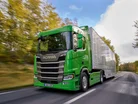
Far from being an organisation content with standing still, Scania is embarking on a restructure in response to rapid changes across the global transport and manufacturing sectors.
As technology evolves and regionalisation reshapes demand, the company is introducing a series of structural changes to increase agility, simplify decision-making and align its global business more closely with customer needs.
This organisational shift includes merging departments, consolidating commercial activity and establishing a sharper regional focus to enhance long-term competitiveness. It aims to accelerate performance while reinforcing Scania’s ability to deliver consistent value in an increasingly complex and fragmented landscape.

A single commercial structure
Scania is bringing together its Sales and Marketing and Commercial Operations functions under one umbrella – a newly-created unit called Scania Commercial.
The structure takes effect from 1 January, 2026, and aims to align global market strategies with sales execution and commercial development across all regions.
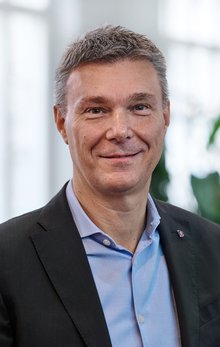
Scania has confirmed the appointment of Stefano Fedel – who first joined the business back in 2001 – as Executive Vice President and Head of Scania Commercial.
He currently serves as Executive Vice President and Head of Sales and Marketing, bringing over two decades of international experience across commercial functions.
"Stefano brings valuable experience of our customers in markets around the world, in addition to a strong commercial mindset and solid international leadership," comments Christian Levin, President and CEO at Scania.
"His ability to turn strategy into real business results – both short and long term – makes him well suited to lead a unified Scania Commercial and strengthen our commercial position globally.”
The new unit is set to focus on improving collaboration, simplifying global processes and reducing internal complexity, while keeping customer value at the core of commercial activity. It replaces the previous structure where regional commercial units and global sales strategy operate separately.
The position of Head of Scania Commercial Operations, previously existing within the Executive Board, has been dissolved, with responsibilities from that role to be absorbed into Scania Commercial.
Targeted growth strategy for China
China remains one of the largest transport markets globally and forms a key pillar in Scania’s long-term regional growth plans. Recognising this, the company is placing dedicated executive focus on its China operations by establishing Scania Group China as a distinct organisational function.
From 1 January, Camilla Dewoon will step into the role of Executive Vice President and Head of Scania Group China, having joined the business in 1998. Her past roles include Head of Communications and Sustainability and she currently leads China Governance for Scania.
Camilla's appointment signals Scania’s intent to align global ambitions with local execution in a market that continues to shift rapidly in its demands and regulatory frameworks. The company’s move toward more region-specific operational models reflects its focus on adapting to global variability while maintaining consistent standards.
Christian continues: “Camilla has a proven track record of building strong brands, driving commercial development and navigating complex international markets, and her global experience makes her well prepared for this strategically critical role. She will be instrumental in translating our global priorities into successful local execution and accelerating Scania’s growth in Asia.”
Scania sees China not only as a volume market but also as a space for innovation, logistics development and sustainable transport initiatives. Camilla’s appointment signals a stronger integration of regional expertise into Scania’s executive direction.
Strategy and communications combine
Scania is also bringing together Strategy and Corporate Management with Communications and Sustainability into a single function called Strategy and Communications. The change is designed to ensure greater consistency in internal and external messaging, with a clearer line between strategy formation and execution.
As of 1 December, Anna Carmo e Silva is the new Executive Vice President and Head of Strategy and Communications. She joined Scania as a trainee and has, over the years, held several key strategic and operational roles, including her most recent position as Head of Strategy and Corporate Management.
Anna's promotion also brings her onto the Executive Board, making her instrumental in creating cross-functional clarity and aligning sustainability messaging with core business objectives.
Christian adds: "Anna has an outstanding ability to connect strategy with real-world execution and, throughout her more-than-20 years at Scania, she has consistently demonstrated strong leadership.
"Bringing strategy and communications together will be an enabler for increased efficiency and alignment across the company. Anna will help us move with clarity, speak with one voice and strengthen Scania’s direction through a period of fast change."
The combined unit is designed to reduce silos, increase transparency and deliver unified leadership messages across Scania’s global business units. Strategy, brand alignment and corporate priorities now operate under a single structure, with clear accountability for translating vision into practice.
By adapting its executive functions and operational structure, Scania is seeking to remain competitive in an industry where speed, regional knowledge and commercial coherence are critical.
Company portals

Executives
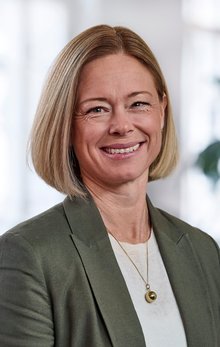
Anna Carmo e Silva
Executive Vice President and Head of Strategy and Communications
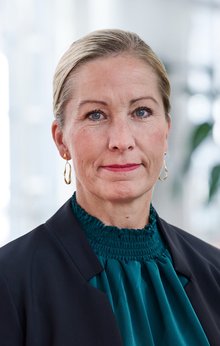
Camilla Dewoon
Executive Vice President and Head of Scania Group China
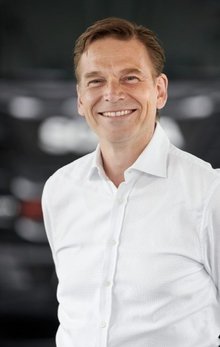
Christian Levin
President and CEO
Stefano Fedel
Executive Vice President and Head of Scania Commercial