
Scania: Sustainable Solutions for Bus and Coach Operators
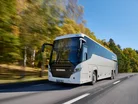
Amid rapid political and technological change, long-distance bus and coach operators face increasing pressure to adapt – especially as regulations around carbon emissions tighten and sustainability laws differ between nations and cities.
In response, Scania has introduced two new powertrains that offer alternatives to meet both current challenges and those on the horizon.
The launch includes the Scania Super, a next-generation internal combustion engine (ICE), and a plug-in hybrid electric vehicle (PHEV) option. These two solutions provide a flexible platform for operators needing to meet zero-emission zone rules, reduce total operating costs and enhance vehicle lifespan and reliability.
Scania has made both powertrains available on the same platform, meaning operators can tailor their vehicle choice depending on route demands, infrastructure availability or emissions targets. The company aims to offer a strategic balance between low emissions, improved cost-efficiency and ease of transition.
Carl-Johan Lööf, Head of Product Management for People Transport Solutions at Scania, comments: "Our new combustion and plug-in hybrid powertrains are shining examples of Scania’s twin commitment to sustainability and profitability for bus and coach customers."
Exploring the Scania Super powertrain
For many long-distance routes worldwide, a combustion-powered coach remains the most suitable option due to route length and refuelling infrastructure.
The Scania Super powertrain supports this with an upgraded 13-litre engine, delivering notable efficiency improvements over its predecessor.
Scania claims fuel savings of up to 8% compared to its previous class-leading ICE powertrain, resulting in a similar reduction in CO2 emissions. These gains are the result of a new engine working in tandem with the updated Scania Opticruise gearbox, a smart automated transmission system designed to optimise shift performance and fuel efficiency.
The powertrain is already compatible with the Euro 7 emissions standard, the upcoming European regulation designed to reduce harmful tailpipe emissions such as nitrogen oxides (NOx) and particulate matter. A completely new aftertreatment system supports these lower emissions without affecting engine performance.
Durability is central to the Scania Super proposition. The engine is built to cover up to two million kilometres, a substantial increase on its predecessor. This directly contributes to lowering the total cost of ownership, as extended engine life means fewer replacements and reduced downtime.

Scania has also improved maintenance access by repositioning all engine filters to the "cold" side of the unit – away from the turbocharger – allowing for quicker and easier filter changes.
Road safety is also prioritised. The new engine includes improved auxiliary braking, which aids in vehicle control, particularly during downhill or emergency braking. This forms part of Scania’s broader commitment to safer road travel, which is further supported by its optional suite of driver assistance and safety systems.
Plug-in hybrid slashes emissions
The PHEV version is designed for operators who must comply with low- and zero-emission zones without compromising on route length or operational flexibility.
With an integrated e-machine and six-speed powershift gearbox, the PHEV can run in four drive modes: electric, hybrid, charge sustain and forced charging, giving operators flexibility to optimise energy use depending on location or journey profile.
When fully charged, the PHEV can run on electricity alone for up to 80 kilometres, which is sufficient to enter or exit most zero-emission zones without switching to diesel.
Electric output stands at 290 kilowatts, allowing strong performance even when operating in electric mode. Critically, the PHEV retains a conventional engine, meaning long-distance routes that exceed the electric range remain fully achievable without requiring a change in infrastructure or schedule.
Operators can automate power mode transitions using Scania Zone, a geofencing tool that allows the vehicle to switch from hybrid to electric drive when entering predefined areas such as city centres, making compliance with city-level air quality rules seamless and automatic.
When combining electric and hybrid usage in typical coach traffic, Scania states the powertrain can lower fuel consumption and CO2 emissions by up to 40%, depending on route and traffic conditions. A dual-mode system allows operators to reduce environmental impact without sacrificing performance or passenger comfort.
Flexible options meet transport demands
Scania's strategy focuses on flexibility, as opposed to a one-size-fits-all approach.
Carl-Johan explains: "With these new powertrains, we will be able to provide long-distance bus and coach operators with incredibly competitive solutions, regardless of their specific needs or which particular challenges they face, meeting both their current and future business needs."
Scania's latest product launch allows operators to make fleet decisions based on their infrastructure, route types and regulatory environments.
Whether it's a high-mileage diesel coach with long service life or a plug-in hybrid ready to navigate emissions-restricted zones, the company is delivering tailored answers to diverse transport demands.