Carbon Capture Advances: Northern Lights in Manufacturing
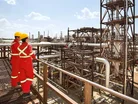
Carbon capture is a strategic component in the journey towards achieving the net zero target by 2050 as laid out in the Paris Agreement.
Leading this industrial innovation, Shell, TotalEnergies and Equinor have collaborated to construct the world’s premier pipeline dedicated to conveying CO₂ into the Aurora reservoir.
This collective effort, significantly impacting industrial sectors in Europe, is designated as The Northern Lights project.
Initiating a ground-breaking approach in the manufacturing domain, these companies are committed to diminishing industrial emissions through a pioneering Carbon Capture and Storage (CCS) service.
Anna Mascolo, Executive Vice President for Low Carbon Solutions at Shell, writing on LinkedIn, said: "Northern Lights has just made history – Shell's joint venture CCS project with Equinor and TotalEnergies is now the world’s first fully operational scheme to offer cross-border CO₂ transport and storage as a commercial service, with the first volumes now safely stored."
Understanding the carbon capture process
The operation entails transporting CO₂ through a 100-kilometre pipeline into the Aura reservoir, situated 26,000 metres beneath the seabed within the Norwegian North Sea.
This location is strategically selected to store CO₂ sourced from Norway for the remainder of 2025.
Industrial contributors include Heidelberg Materials, a cement production site and Hafslund Celsio, a waste-to-energy facility. This supply chain demonstrates the manufacturing industry's increasing commitment to sustainable practices.
Each dedicated carbon vessel is capable of transporting 7,500 cubic metres of CO₂ per journey, emphasising logistical efficiency.
The process involves liquified CO₂ being shipped from capture sites to onshore facilities before permanent undersea storage.
Michel Ziad Hajjar, Managing Director at TotalEnergies, shared on LinkedIn: “Happy to announce that the first CO₂ volumes were successfully transported by vessel from Heidelberg Materials’ cement factory in Brevik, Norway to Northern Lights’ facilities in Øygarden.
"This represents a new phase for the CCS industry in Europe, offering hard-to-abate sectors a credible and tangible way to reduce CO₂ emissions.”
The project's origins and development
Originating from the Norwegian government's initiatives to create a comprehensive CCS value chain by 2024, the Northern Lights project has been years in the making.
Back in 2016, feasibility studies were conducted, which catalysed the development of the present infrastructure.

The project's first phase concluded in 2024 with the construction of a reception and storage facility capable of handling 1.5 million tonnes of CO₂ annually.
The facility includes an adept terminal for receiving carbonate shipments, alongside a 100km subsea pipeline and subsea injection facilities to ensure secure carbon storage.
Hege Skryseth, Executive Vice President at Equinor, wrote about the project's triumph on LinkedIn: "The achievement is not only a technological breakthrough, but also a testament to years of dedication and collaboration across Equinor and with external partners.
“Carbon Capture and Storage (CCS) can capture up to 90% of CO₂ emissions from fossil fuel use in electricity generation and industrial processes, providing a crucial method for climate change mitigation."
Future prospects for Northern Lights
The immediate objective of Northern Lights is to capture 400,000 tonnes of carbon dioxide per annum from the cement factory. Expansion plans include incorporating CO₂ capture from Denmark and the Netherlands by 2026.
Part of this growth involves partnerships with companies like Ørsted, aiming to capture and store emissions from its ammonia plant in the Netherlands.
Moreover, by 2028, the project's capacity is expected to expand further, achieving an annual storage capacity of 5 million tonnes.
Noteworthy is the commitment from Stockholm Exergi, a Swedish energy provider, to store up to 900,000 tonnes of CO₂ each year, underscoring the growing commitment within the energy sector to adopt CCS technology.