Space Supply Chains: Blue Origin's New $600m Florida Factory
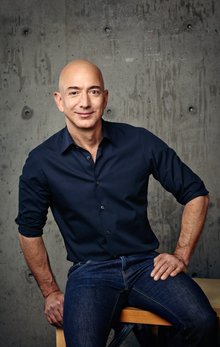
Jeff Bezos' space company Blue Origin is set to expand its Rocket Park campus in Cape Canaveral, Florida Governor Ron DeSantis has announced.
The new manufacturing facility will make the upper stage of rockets and is set to support 500 jobs.
Named Project Horizon, the average salary at the facility will be more than US$98,000.
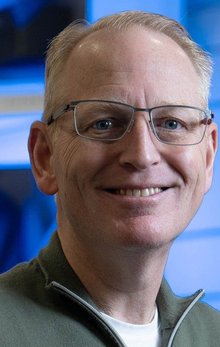
"Project Horizon is the latest and most ambitious chapter in Blue Origin's decade-long commitment to Florida," says Dave Limp, CEO of Blue Origin.
“Since 2015, we’ve scaled to nearly 4,000 employees, invested more than US$2.3bn across 500 Florida suppliers and expanded to 11 sites across Brevard and Orange Counties. And we’re just getting started.”
Space supply chains under strain
In the US, space supply chains are under strain, according to research from PwC and AIA.
More than 3,400 US space objects launched in 2025 alone, nearly 10 times the volume in 2019, and aerospace manufacturing output grew 30% over the past five years.
Rather than new factories being built to meet this demand, existing factories and machines are running hotter.
Aerospace capacity utilisation rose to 74% in December of 2025 and the average age of private industrial structures in the aerospace industry has reached nearly 26 years.
Eric Fanning, AIA President and CEO, says: “The rapid expansion of the US space industry has driven demand to historic highs, placing significant pressure on the supply chain that underpins US leadership in space.”
From Florida to space
Florida has been a staple for US space launches since 1950, home to what is known as the Space Coast.
Cape Canaveral and the Kennedy Space Center both sit in this area, famous for launching humans to set foot on the moon with the 1969 Apollo 11 mission.
Blue Origin is currently the only company to both manufacture and launch rockets from Florida.
Its new expansion will use the Spaceport Improvement Program, a partnership between Space Florida and the Florida Department of Transportation, to support construction of the 830,000 square foot facility.
“Blue Origin’s expansion is proof that when you get the fundamentals right, the best companies bring their best jobs to you,” says Mr DeSantis.
“Florida has created the ideal environment where companies can succeed, scale and keep choosing Florida over and over again—promoting growth that reinforces the state’s position a national leader in advanced manufacturing and aviation and aerospace—bolstering Florida’s Space Coast and beyond.”
Blue Origin's manufacturing footprint
Founded in 2000, Blue Origin operates the New Shepard and New Glenn rockets.
It produces engines for its own vehicles and for others, including United Launch Alliance's Vulcan Centaur, and is working on the Blue Moon human lunar lander for NASA's Artemis programme.
The company's Rocket Park manufacturing campus is co-located with launch facilities in Space Florida's Exploration Park.
The original 650,000 square foot facility was designed and built by Haskell, including nearly 9,000 tonnes of steel.
It includes a low bay for component fabrication, a high bay for tank and vehicle manufacturing and an office and support bay for operations.

In Huntsville, Alabama, it operates a 600,000 square foot facility that manufactures rocket engines, including the BE-4 and BE-3U.
Blue Origin's primary headquarters are in Kent, Washington, home to its research and development hub.
Commercial space companies in the US
Alongside being home to NASA, the US is estimated to have more than 5,500 private space-focussed companies which make up more than 50% of the market.
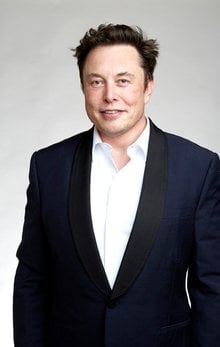
Among the most known, and in competition with Blue Origin, is Elon Musk's SpaceX.
SpaceX generated US$18.7bn in sales in 2025 and is setting up for an IPO with potential market valuation upwards of US$1.75tn.
Northrop Grumman, Sierra Space and ThinkOrbital are just a few of the others both supporting NASA missions and working alone.
Company portals



Executives
David Limp
Chief Executive Officer
Elon Musk
Tesla CEO
Jeff Bezos
Founder and Executive Chairman at Amazon