NVIDIA powers European AI growth with industrial focus
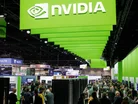
At NVIDIA’s GTC event in Paris, NVIDIA Founder and Chief Executive Jensen Huang laid out how the company was helping European nations to scale AI capabilities.
From data centres to robotics, NVIDIA’s latest industrial and strategic rollouts have positioned it at the centre of Europe's AI development.
Jensen stepped on stage at the Dôme de Paris to explain how AI infrastructure was reshaping the industry.
Addressing Europe’s largest technology event, he introduced a model of "intelligence infrastructure" tailored to national and industrial needs.
Built infrastructure for Europe’s AI future
"We now have a new industry – an AI industry – and it’s now part of the new infrastructure called intelligence infrastructure that will be used by every country, every society,” he said.
In line with this, NVIDIA is working with cloud providers and governments across Europe to build an effective hardware and software base for AI deployment.
A key development is the company’s GB200 NVL72 platform, which has moved into full production. Described by Jensen as NVIDIA’s “most powerful AI system,” the GB200 houses 72 processing units designed to support reasoning and planning workloads.
“This machine was designed to be a thinking machine, a thinking machine, in the sense that it reasons, it plans, it spends a lot of time talking to itself,” Jensen added.
Demand for NVIDIA's inference technology, which allows AI systems to interpret and respond to new data, has surged. The number of inference users has grown from 8 million to 800 million in just two years.
To meet that demand, NVIDIA’s manufacturing partners are producing 1,000 GB200 systems per week. Alongside the GB200, the company also offers a range of options including the DGX Spark and RTX PRO Servers to suit different industrial environments.
AI for manufacturing and quantum research
One major highlight is the announcement of an industrial AI cloud based in Germany. NVIDIA said it would be the world’s first, supporting manufacturers through simulation, automation and optimisation using the Omniverse platform.
Omniverse allows the creation of digital twins – virtual models that mirror physical systems – enabling manufacturers to refine operations before applying them on the factory floor.
“We’re working on industrial AI with one company after another,” Jensen noted, referring to broad collaboration across sectors.

To support regional development, NVIDIA is expanding its technology centres in Finland, Germany, Spain, Italy and the UK. These hubs are focused on advancing quantum computing and AI skill development.
The company’s CUDA-Q platform, which blends quantum and classical computing, is already live on Denmark’s Gefion supercomputer and NVIDIA’s Grace Blackwell systems.
Jensen also confirmed partnerships with quantum hardware providers and European supercomputing centres aimed at progressing hybrid AI-quantum computing and quantum error correction.
“Quantum computing is reaching an inflection point,” he said. “We are within reach of being able to apply quantum computing, quantum classical computing, in areas that can solve some interesting problems in the coming years.”
Localised models, robotic systems and AI factories
NVIDIA’s Nemotron platform has been designed to help developers create large language models specific to local languages and customs. These models integrate with Perplexity, a reasoning-based search engine, to deliver multilingual AI services across Europe.
“You can now ask and get questions answered in the language, in the culture, in the sensibility of your country,” Jensen explained.
The company has also rolled out agentic AI blueprints, such as the NeMo Agent toolkit and a development guide for creating data flywheels.
These tools aim to help businesses and governments build AI agents capable of autonomous action, securely and at scale.
Jensen introduced DGX Cloud Lepton, a cloud platform providing accelerated computing access across Europe.
Lepton integrates with Hugging Face, a machine learning hub, and is being deployed in partnership with governments, telecoms companies and cloud platforms.
“One model architecture, one deployment and you can run it anywhere,” Jensen said.
On the manufacturing side, NVIDIA DRIVE has entered production. This autonomous vehicle platform delivers the full software and hardware package for smart transport systems. Jensen also presented NVIDIA’s progress in robotics, referencing partnerships with DeepMind and Disney – together they have developed Newton, a physics engine for training robotic systems.
“Soon, everything that moves will be robotic,” said Jensen. “And the car is the next one.”
Joined on stage by Grek, a demonstration robot, Jensen illustrated how physical robots and digital agents are merging.
“We have physical robots, and we have information robots. We call them agents,” he explained. “The technology necessary to teach a robot to manipulate, to simulate — and of course, the manifestation of an incredible robot — is now right in front of us.”
The vision concluded with a shift in data centre purpose. Instead of just storing information, AI factories – NVIDIA’s new concept – will process language tokens, which are the building blocks of AI communication and cognition.
Explore the latest edition of Manufacturing Digital and be part of the conversation at our global conference series, Manufacturing LIVE.
Discover all our upcoming events and secure your tickets today.
Manufacturing Digital is a BizClik brand.