TSMC & Intel: How Manufacturers Handle AI Chip Demand
Growth in AI is placing huge strain on the semiconductor supply chain.
Taiwan Semiconductor Manufacturing Company (TSMC) has reportedly informed some major customers that it cannot fully satisfy demand for cutting-edge AI processors.
According to The Information, the world's largest contract chipmaker has notified key clients including NVIDIA and Broadcom that capacity at its most advanced manufacturing nodes is becoming increasingly constrained.
As AI workloads expand rapidly across cloud computing, data centres and enterprise applications, competition for state-of-the-art chip production has grown more intense.
TSMC is central in this demand, manufacturing the most advanced chips used by leading AI companies.
However, hyperscale cloud providers, chipmakers and system designers are all vying for priority access, placing strain on capacity across multiple quarters.

Industry analysts suggest that lead times at advanced nodes are extending, prompting some customers to consider alternative suppliers to prevent delays that could hinder AI infrastructure deployments.
Strong earnings and AI demand
TSMC's financial results show the strength of AI-driven demand.
The company posted a 35% year-on-year increase in fourth-quarter profit, achieving a record high that exceeded market expectations.
Revenue for the quarter reached US$33.7bn, while net income climbed to US$16.3bn.
Profit growth has now risen year on year for eight consecutive quarters.
High-performance computing, which encompasses AI and 5G applications, represented 55% of total revenue in the quarter.
Advanced chips measuring seven nanometres or smaller made up 77% of wafer revenue.
Speaking on an earnings call, TSMC's Chief Financial Officer Wendell Huang said: “We expect our business to be supported by continued strong demand for our leading-edge process technologies.”
TSMC is also advancing its most sophisticated technologies.
The company commenced mass production of 2 nm chips last quarter and intends to further increase capacity in 2026.
Capital expenditure is projected to rise substantially to between US52bnandUS52bn and US52bnandUS56bn in 2026, up from US$40.9bn in 2025.
Speaking to CNBC, Jake Lai, Senior Analyst at Counterpoint Research, said 2026 would be another "breakout year” for AI server demand, driven by continued expansion in advanced chip manufacturing and packaging technologies.
The return of Intel
TSMC's capacity limitations are changing competitive dynamics across the semiconductor industry.
One company receiving renewed attention is Intel, which has dedicated time to rebuilding its manufacturing capabilities following a series of setbacks.
Intel does not need to surpass TSMC to gain from the current environment.
Instead, analysts see an opportunity for the company to function as a relief valve in an overheated supply chain by providing foundry capacity, which is becoming increasingly scarce.
Additionally, Intel's manufacturing footprint offers geographic diversification and alignment with US industrial policy.
These factors are growing in importance as companies pursue resilience amid geopolitical uncertainty and tariff risks.
Investor sentiment towards Intel has improved, with the company's shares increasing 19% so far in 2026 amid strong early-year trading and renewed confidence in its long-term strategy.
Momentum strengthened further following positive comments from US President Donald Trump, who praised Intel's latest processors after a meeting with CEO Lip-Bu Tan.
NVIDIA has already invested in Intel and ongoing speculation suggests Apple could utilise Intel's foundry services for elements of its chip production.
Expansion plans and challenges
TSMC is expanding its global footprint to support long-term demand.
Major projects are progressing in Japan, Europe and Arizona, where the company has acquired additional land to construct new facilities.
CEO C.C. Wei says the Arizona expansion will form a gigafab cluster designed to improve productivity and better serve US customers.

However, overseas expansion involves trade-offs.
TSMC has cautioned that fabs outside Taiwan will operate at reduced margins, reflecting higher costs and operational complexity.
C.C. also identified global tariff policies as a potential risk heading into 2026.
Company portals



Executives
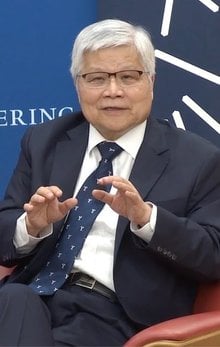
C. C. Wei
CEO
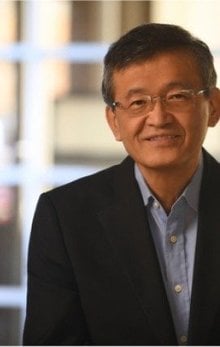
Lip-Bu Tan
Chief Executive Officer