
Why Porsche is Considering Ousting CEO Oliver Blume
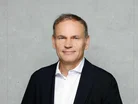
Porsche is exploring a leadership change amid growing investor concerns and financial headwinds.
The famous sports car brand is considering replacing Oliver Blume, who currently holds a dual CEO role at both Porsche and Volkswagen AG, with a singular leader for the sports-car brand.
Former McLaren Automotive CEO Michael Leiters has been identified as a potential successor. According to Reuters, a statement from Porsche on 17 October confirmed: “Negotiations with Dr Leiters will be initiated”.
It follows pressure from stakeholders regarding Oliver’s dual leadership position, which some investors find unconventional.
Oliver has been CEO of Porsche since 2015 and has held the additional Volkswagen AG leadership role for three years. In an interview with the German Press Agency, he acknowledges the arrangement is not permanent, stating: “I’ve always said: my dual role is not designed to last forever.”
Who is Michael Leiters?
Michael Leiters is a familiar figure in the German automotive industry.
Before his tenure as CEO at McLaren, he spent more than a decade at Porsche in positions that included Executive Assistant to the CEO and Product Line Director.
His career also includes time as Chief Technology Officer at Ferrari, giving him extensive experience across high-performance automotive brands. In April 2025, McLaren announced his departure.
Following his departure, Michael said: “I am honoured to have led McLaren over the past three years. I am thankful to have worked alongside such a dedicated and talented team.”
McLaren credits him with overseeing the launch of several models, including the 750S, the Artura Spider and Coupe, the SolusGT and the W1.
Financial performance and market pressures
The discussions around leadership come as Porsche navigates a challenging economic environment.
Its latest financial report for the 2024 fiscal year shows a sales revenue of €40.083m (US$46.87m), down 1.1% on the previous year.
The report also details a 6.3% drop in unit sales, a figure Bloomberg suggests is linked to declining sales in the large Chinese market.
Following a warning on 13 October of a potential €1.8bn (US$2.1bn) impact on its full-year operating profit, shares in Porsche fell by as much as 9% while Volkswagen’s shares dropped 8%.
Patrick Hummel, a USK analyst, told the Financial Times: “Porsche is still a very complex case for the next few years so the sooner the better that they have a full-time CEO.”

Strategic alignment and manufacturing outlook
The global auto industry is undergoing a costly and slower-than-anticipated transition to electric vehicles (EVs) in Europe and the US.
In response, Porsche announced in September a “comprehensive strategic alignment plan”.
This plan involves delaying its planned rollout of a new EV range positioned above the Cayenne model.
Instead, Porsche will expand its portfolio to include more models with internal combustion engines and plug-in hybrid systems.
Porsche predicts this strategic change will incur expenses totalling €1.3bn (US$1.5bn) in the 2025 fiscal year.
Discussing the redirection, Oliver explained: “This has a noticeable impact on our earnings, but we accept that. It is necessary to ensure that Porsche remains robust and highly profitable.”
While a new CEO would be expected to focus entirely on Porsche’s profitability and competitiveness, Oliver is anticipated to continue leading Volkswagen AG.
Company portals
Executives
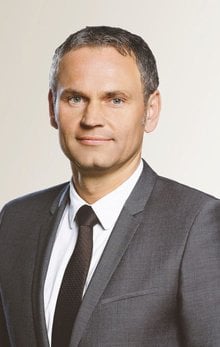
Oliver Blume
CEO