Why Honda is Dumping New EVs and Rethinking Manufacturing
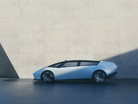
Honda Motor Co has cancelled the development and market launch of three electric vehicle models previously intended for production in North America.
The decision impacts the Honda 0 SUV, Honda 0 Saloon and Acura RSX. The shift follows a comprehensive reassessment of the company’s automobile electrification strategy, driven by rapid changes in the global business environment.
Toshihiro Mibe, Honda CEO, explained the necessity of this shift: "Honda determined that starting production and sales of these three models in current business environment where the demand for EVs is declining significantly would likely result in further losses over the long term."
The change is accompanied by significant write-off and impairment losses on assets originally designated for these specific EV models.
Scrapping Production of Three EV Models
The cancellation of the Honda 0 series and the Acura RSX signifies a major withdrawal from planned EV production lines in the United States.
Honda had previously undertaken a strategic shift toward EVs, believing them to be the optimal solution for small-size mobility.
Speaking as Honda published its annual accounts for 2025, Toshihiro explained the rationale behind the cancellation when he said: "Moving forward into the production and sales phase under the current conditions would likely result in further losses over the long term.
"We are fully aware that many Honda associates, business partners, and those who are on the front lines of sales have devoted great passion to these EV models, and many customers have high expectations for them. Therefore, this decision was by no means an easy one."
Localising production to mitigate tariff impacts
A critical factor in this manufacturing shift is the decline in profitability for gasoline and hybrid models due to newly imposed tariffs.
To improve the earnings situation, Honda is prioritising the increase of local content in its products, particularly within North America.
Noriya Kaihara, Honda EVP, detailed the regional manufacturing strategy: "In North America, where new tariffs have significant impact on our business, we will further increase the local content of our products, mostly with our next-generation hybrid models, which will be launched from 2027 onward."
By intensifying local production for next-generation hybrid models from 2027, the company aims to mitigate the adverse effects of tariff policies. This approach ensures that manufacturing remains competitive despite the challenging geopolitical and regulatory landscape currently affecting international trade.

Converting battery lines for hybrid vehicles
One of the most significant manufacturing adaptations involves the L-H Battery Company, a joint venture partnership with LG Energy Solution in Ohio. Instead of solely focusing on EV batteries, Honda is moving forward with discussions to convert existing EV battery production lines into hybrid battery production lines.
Noriya explained: "Especially with batteries – one of the core components of hybrid systems – discussion is moving forward as part of our JV partnership with LG Energy Solution to localise production of hybrid batteries by converting EV battery production lines to hybrid battery production lines at L-H Battery Company."
This is designed to accommodate the high demand for hybrid vehicles. By localising the production of hybrid batteries, the company intends to achieve stable operation of the joint venture.
Establishing a disciplined fixed-cost structure
To strengthen its business structure, Honda is establishing a fixed-cost structure appropriate for its current scale.
Noriya said: "While pursuing these initiatives, from a financial perspective, we will transition to a fixed-cost structure appropriate for the scale of our business by thoroughly implementing disciplined spending controls. To be more specific, we will tighten the criteria for setting investment caps based on earnings, and we will enforce even more disciplined decision-making than before."
Toshihiro said that the management team must transition the automobile business to a structure that enables mid- to long-term growth. This includes reorganising the strategic framework to respond flexibly to environmental changes.
Regaining earnings through next-generation hybrids
The company expects its automobile business to return to a growth trajectory from the fiscal year ending March 31, 2028. This will be driven by the introduction of new hybrid models and systems globally.
Noriya highlighted the technical roadmap: "From 2027 onward, we will start applying our next-generation hybrid system to key models in stages. Also, we are planning to further expand our HEV line-up by applying a newly developed large-size hybrid system to our larger vehicles in the D-segment and above, which represents a significant market size."
By improving the model mix and increasing product competitiveness, the company intends to regain its earnings power. Manufacturing efficiency will be prioritised to ensure a business structure capable of generating profit stably across different regions and product categories.
CEO's speech in short
Toshihiro said:
- While Honda remains committed to carbon neutrality by 2050, the business environment has changed at a speed far exceeding expectations
- The easing of US environmental regulations and the rise of newer manufacturers in China are primary factors
- Introducing the Honda 0 SUV, Honda 0 Saloon and Acura RSX without business viability could damage the brand value
- He takes responsibility for the decision, adding that management must face reality rather than justify the past
- Demand for EVs is currently declining but this trend is not permanent
- Honda will address each affected supplier with care and rebuild its strategy to ensure that, when demand resumes, the company will offer compelling products unique to the brand.