Nestlé, Mars and Walmart Leave US Plastics Pact
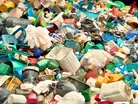
The US Plastics Pact, a coalition designed to tackle the mounting issue of plastic waste in manufacturing and corporate processes, has seen a retreat by several high-profile members.
Walmart, Mars, Mondelēz, Nestlé and L’Oréal USA have all confirmed their departure, with the exits coinciding with a shift in the Pact’s focus from its original 2025 targets to a new set of goals extending to 2030.
The US Plastics Pact launched in 2020 as part of the Ellen MacArthur Foundation's global network of pacts, aimed largely at the fast-moving consumer goods sector.
It attracted wide industry support, beginning with around 60 companies and growing to more than 125 by 2023.

Targets miss the mark
By 2023, only half of the plastic packaging introduced to the market by member companies was reusable, recyclable or compostable.
Just 11% of materials used were recycled or biobased across packaging portfolios.
The original targets aimed for 100% reusable, recyclable or compostable packaging and an average of 30% recycled content by 2025.
Mars admitted in 2024 that although it had made "good progress" on its goals aligned with the Ellen MacArthur Foundation, it was "unlikely to fully meet them by the end of 2025" due to the fact that"the design and infrastructure changes needed are taking longer than we anticipated".
Google’s Robert Little, Sustainability Strategy Lead, summarised the situation on LinkedIn: “The initial targets set by the US Plastics Pact for 2025 were ambitious, aiming for 100% reusable, recyclable or compostable packaging and an average of 30% recycled content.
“While progress has been made, the recent departures and PepsiCo’s recalibrated targets highlight inherent systemic challenges.”
Walmart shared a similar view in a February 2025 update, reporting: “While we have made significant progress towards our ambitious 2025 goals for recycled content, virgin plastic reduction and packaging recyclability, we expect to fall short of achieving these goals by 2025.”
Walmart remains active in other sustainability groups, including the EPR Leadership Forum, which it co-founded alongside other former Pact members.
Cost concerns and limited returns
Beyond corporations, some non-profit groups have also stepped away from the Pact. Heidi Sanborn, Executive Director of the National Stewardship Action Council, said her organisation was not receiving benefits that matched its time commitment.
She added that a new fee for participation introduced by the Pact also influenced the decision to leave.
Despite the setbacks, not all companies have chosen to leave. Aldi, Kraft Heinz and over a dozen others have joined a new “activator accelerators” programme, committing to the Pact’s extended 2030 targets.
These include eliminating problematic materials, achieving 30% recycled content and reducing virgin plastic use by 30%.
Eric Downing, the Pact’s Director of Marketing & Communications, confirmed that most members in the new group renew participation on an annual basis.
Future of the Pact
While member numbers have shrunk, the Ellen MacArthur Foundation reported in 2024 that the global plastics pacts had driven a 44% increase in recycled content in packaging over six years.
They also facilitated the removal of 360,000 tonnes of problematic or unnecessary plastics from circulation.
Even so, the high-profile withdrawals suggest that voluntary frameworks like the US Plastics Pact may struggle without stronger enforcement mechanisms or more adaptable models.

Work on the new 2030 targets is scheduled to begin on 1st January 2026, but progress may be hindered by the absence of some of the sector’s biggest names.
With the Global Plastics Treaty still under negotiation, the outlook for unified international plastic policy remains uncertain.
As Robert put it: “One might argue that this reinforces the idea that true systemic change often requires a blend of collaborative frameworks and independent, innovative approaches tailored to specific business models and regional realities, rather than a one-size-fits-all commitment.”
Explore the latest edition of Manufacturing Digital and be part of the conversation at our global conference series, Manufacturing LIVE.
Discover all our upcoming events and secure your tickets today.
Manufacturing Digital is a BizClik brand.