Top 10: 3D Printing Companies
Additive manufacturing, or 3D printing, is shifting from prototyping to production as supply chains demand agility and engineers seek faster iteration.
This week's Top 10 list from Manufacturing Digital ranks the companies shaping that transition, from marketplaces that match jobs to capacity, to hardware and software specialists industrialising workflows.
Together they point to a more digital, distributed and resilient manufacturing model where data, not tooling, drives advantage across aerospace, healthcare and industry.
10. Shapeways
Market Cap: US$1.9m
Founded: 2007
CEO: Marleen Vogelaar
HQ: Eindhoven, Netherlands

Shapeways operates a marketplace and on-demand 3D printing service aimed at designers and SMEs.
Following a turbulent 2024 that saw its US arm file for bankruptcy, the brand and IP were acquired and operations relaunched in Europe, with an emphasis on flexible fulfilment across plastics and metals.
Shapeways’ heritage in community-driven product creation still resonates with makers who want small-batch runs without tooling. The platform offers a useful route to market for custom parts and niche product lines, particularly for consumer, jewellery and hobbyist applications.
9. Northann Corp
Market Cap: US$10.1m
Founded: 2013
CEO: Lin Li
HQ: Elk Grove, California, USA
Northann focuses on digitally produced building materials, leveraging 3D texturing and advanced surface printing for resilient flooring and wall panels. The model blends design tooling, global sourcing and rapid-turn production to serve retailers and private-label brands.
With modest scale and a concentrated product set, execution depends on channel partnerships and inventory discipline.
CEO Lin Li has tightened control through preferred equity, signalling long-term intent but also a governance structure that centralises decision-making.
8. Prodways Group
Market Cap: US$48.2m
Founded: 2013
CEO: Raphaël Gorgé
HQ: Paris, France

Prodways is a French industrial AM player spanning printers, materials and parts production. Its proprietary MOVINGLight technology targets dental, medical and aeronautics applications where precision and throughput matter.
The group’s dual model – selling systems while operating service bureaus – provides diversified revenue but requires capital discipline. Recent focus has been on profitable niches such as dental models, hearing and aerospace components, supported by materials know-how. With a smaller footprint than US peers, growth hinges on channel expansion and vertical partnerships.
Continued specialisation, tighter working capital and more recurring materials income would strengthen resilience and improve operating leverage in cyclical end markets.
7. Velo3D
Market Cap: US$84m
Founded: 2014
CEO: Bradley “Brad” Kreger
HQ: Fremont, California, USA
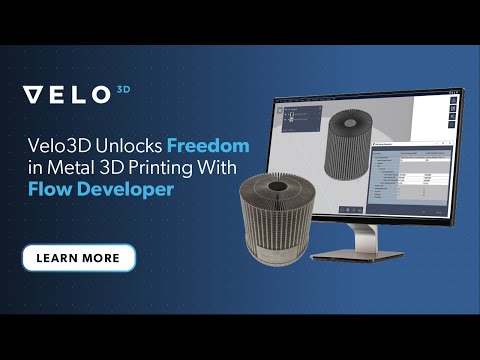
Velo3D designs integrated metal AM solutions built around its Sapphire printers and Flow/Assure software, enabling low-angle, support-minimised builds prized by space, defence and energy customers.
After a challenging 2024, the board confirmed Brad Kreger as CEO and reworked financing to stabilise liquidity. The near-term task is to convert marquee pilots into repeat production, improve field reliability and lift gross margins through installed-base utilisation and services.
If Velo3D tightens execution and prioritises high-duty applications where geometry freedom is critical, it remains well placed as a premium metal AM supplier to mission-critical programmes.
6. 3D Systems
Market Cap: US$270m
Founded: 1986
CEO: Jeff Graves
HQ: Rock Hill, South Carolina, USA

3D Systems is a pioneer of additive manufacturing with a broad portfolio across polymers and metals, including SLA, SLS and DMP platforms, materials and healthcare solutions. Under Jeff Graves, the company has refocused around core printing and medical segments, exiting non-strategic assets to simplify operations.
The healthcare business – dental, surgical planning and implants – offers attractive margin pools, while industrial systems compete on breadth and application support.
The challenge remains consistent profitability through the cycle. Sharper go-to-market, materials attach and software-enabled workflows should support steadier cash generation as customers scale from prototypes to regulated, serial production.
5. Nano Dimension
Market Cap: US$330m
Founded: 2012
CEO: Yoav Stern
HQ: Ness Ziona, Israel / Waltham, Massachusetts, US

Nano Dimension specialises in additively manufactured electronics, notably its DragonFly platform for rapid PCB prototyping and low-volume production with embedded components. The strategy blends hardware, inks and design software with acquisitions in micro-fabrication and inspection to build a digital electronics manufacturing stack.
With defence, aerospace and medtech customers, value lies in compressing design-to-device cycles and enabling complex multilayer structures.
Capital allocation has been a headline, but if management sustains customer adoption and integrates acquisitions into a cohesive AME workflow, Nano Dimension can define a defensible category at the intersection of additive and electronics manufacturing.
4. Materialise NV
Market Cap: US$350m
Founded: 1990
CEO: Brigitte de Vet-Veithen
HQ: Leuven, Belgium

Materialise is the software heartbeat of additive, with Magics for build prep and Mimics for patient-specific medical workflows, alongside an industrial and medical printing service. Its decades-long focus on open software platforms and regulated healthcare applications gives the firm recurring revenue and deep integration with hospitals, device makers and printer OEMs.
As printing hardware commoditises, Materialise’s advantage is data, algorithms and QA woven into validated processes.
Expect continued growth from personalised implants, surgical guides and digital dentistry, plus software expansion into simulation and traceability that helps customers industrialise AM at scale with compliance built in.
3. Stratasys
Market Cap: US$770m
Founded: 1989
CEO: Yoav Zeif
HQ: Minnetonka, Minnesota, US / Rehovot, Israel

Stratasys is a polymer AM leader across FDM, PolyJet and SAF technologies, serving aerospace, automotive, healthcare and consumer goods. The company’s strategy blends hardware, materials and GrabCAD software to drive fleet management and application development.
Despite a volatile consolidation backdrop, Stratasys retains a large installed base and strong brand in enterprise polymer printing. Growth priorities include end-use parts, tooling and healthcare where accuracy and repeatability are quantified.
With disciplined materials attach and software-enabled workflows, Stratasys can defend share while nudging customers from prototyping to production, especially in high-mix, lower-volume applications that benefit from digital inventories.
2. Protolabs
Market Cap: US$1.13bn
Founded: 1999
CEO: Suresh Krishna
HQ: Maple Plain, Minnesota, US

Protolabs is the original digital manufacturer, combining 3D printing with CNC machining, injection moulding and sheet metal for rapid prototypes and production parts. Its automated quoting, DFM feedback and distributed plants make lead times predictable for engineers under time pressure.
Under Suresh Krishna the company has pushed deeper into production, improved e-commerce and broadened materials. Scale, process breadth and software are key moats.
As supply chains seek agility, Protolabs is positioned to capture bridge-to-production and low-to-mid volume runs that avoid tooling risk, with recurring revenue driven by enterprise accounts and an expanding long-tail of SMB customers.
1. Xometry
Market Cap: US$3.25bn
Founded: 2013
CEO: Randy Altschuler
HQ: North Bethesda, Maryland, US

Xometry is the category-defining marketplace for custom manufacturing, matching demand with a global supplier network across CNC, sheet metal, injection moulding and 3D printing. Its AI-driven Instant Quoting Engine, enterprise integrations and supplier services (including financial products) create network effects that improve price discovery, lead times and utilisation.
As procurement digitises, Xometry scales without heavy capex, monetising transactions, ads and fintech. The flywheel strengthens with every RFQ, feeding better pricing models and supplier quality scores.
With brand reach, software leverage and a diversified process mix, Xometry tops this list as the most scalable growth platform in digital manufacturing
Company portals








Executives
Brigitte de Vet-Veithen
CEO Materialise
David Stehlin
CEO
Dr. Arun Jeldi
Chief Executive Officer / chairman
Jeffrey Graves
Member Board of Directors
Lin Li
Chief Executive Officer and Founder | NYSE AMEX:NCL

Marleen Vogelaar
Board Member

Randy Altschuler
CEO

Raphaël Gorgé
Président directeur général groupe
Suresh Krishna
CEO
Yoav Zeif
Chief Executive Officer