Top 10: Manufacturing Associations
Between the rapid acceleration of AI, ongoing supply chain volatility and an escalating talent crisis, manufacturers are facing pressures that are difficult to manage in isolation.
According to Deloitte’s 2026 Manufacturing Industry Outlook, the sector is projected to face a staggering 1.9 million unfilled roles by 2033.
On top of this, the shifting landscape of global trade is a top operational concern for 78% of manufacturers.
Manufacturing Digital has ranked 10 of the top manufacturing associations that provide collective strength and guidance to tackle these obstacles.
10. European Automobile Manufacturers' Association
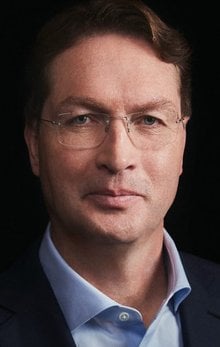
President: Ola Källenius
Headquarters: Brussels, Belgium
Founded: 1991
The European Automobile Manufacturers' Association, known as ACEA from its French name, is the primary lobby and advocacy group for the automotive industry in the European Union.
It represents 16 major Europe-based automobile manufacturers, including BMW Group, Ferrari and Volvo Group.
ACEA serves and provides a collective voice for a wide spectrum of road vehicle production, from passenger cars to buses and coaches.
Its top advocacy priorities include strengthening resilience, pursuing a pragmatic decarbonisation pathway and reversing the decline in European vehicle production.
9. VDMA
President: Bertram Kawlath
Headquarters: Frankfurt, Germany
Founded: 1892

The VDMA (Verband Deutscher Maschinen- und Anlagenbau, or Mechanical Engineering Industry Association) is the largest industrial association in Europe. It represents more than 3,500 member companies that employ approximately three million people.
It represents the capital goods industry, specifically focusing on mechanical and plant engineering, and is organised into 35 specialised trade associations.
The VDMA actively lobbies European and German policymakers to safeguard the industrial competitiveness of its members. It has focuses on reducing bureaucracy, promoting free trade and fostering innovation.
8. Cefic
President: Dr. Markus Kamieth
Headquarters: Brussels, Belgium
Founded: 1972
Cefic, or the European Chemical Industry Council, has more than 600 members, partners and affiliates and is integrated with 22 national chemical federations.
It represents roughly 28,000 chemical companies operating across Europe.
Cefic's advocacy efforts are heavily focused on navigating the dual green and digital transitions while fighting a surge in deindustrialisation. For example, it commissioned the European Chemical Closures & Investments Radar to track chemical plant closures and investments.
7. Federation of German Industries
President: Peter Leibinger
Headquarters: Berlin, Germany
Founded: 1949

The Federation of German Industries (or Bundesverband der Deutschen Industrie) represents the interests of German industrial enterprises and related service providers.
It engages in economic policy advocacy at the national, European and global levels to ensure competitive business environments.
Membership in the BDI is voluntary, operating through an umbrella structure rather than individual corporate memberships. It represents roughly 40 distinct sector associations and speaks for more than 100,000 private enterprises across Germany.
6. National Association of Manufacturers
President and CEO: Jay Timmons
Headquarters: Washington DC, US
Founded: 1895
The National Association of Manufacturers (NAM) is the oldest and largest broad-based industrial trade association in the US.
It represents around 14,000 member companies and subsidiaries, employing approximately 85% of all manufacturing workers in the country.
The NAM’s advocacy covers issues like permitting changes, workforce reform and regulatory relief. The Power of Small, for example, is an ongoing initiative providing targeted representation, legal services and resources specifically designed to help small and medium-sized manufacturers.
5. SME
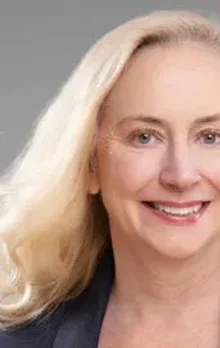
President: Rebecca R. Taylor
Headquarters: Michigan, US
Founded: 1932

Founded in 1932, SME (previously the Society of Manufacturing Engineers) is a non-profit professional association that represents roughly 13,000 professional and student members worldwide.
SME supports and advocates for advancements across a variety of crucial manufacturing industries, focusing specifically on aerospace and defence, energy, medical, motorised vehicles and workforce development.
It advocates heavily for reskilling, retraining and reforming the educational pipeline to close the skills gap and support digitisation.
4. Association for Advancing Automation
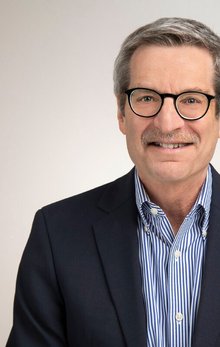
President: Jeff Burnstein
Headquarters: Michigan, US
Founded: 1974
The Association for Advancing Automation (A3) is North America’s largest trade association representing the global automation industry.
It represents more than 1,400 organisations worldwide with a diverse membership base, from automation manufacturers to research groups.
While A3 was traditionally rooted heavily in automotive manufacturing, its focus has expanded into sectors driving current market growth including food and beverage packaging, life sciences and pharmaceuticals and electronics manufacturing.
Its advocacy aims to support policies that push the physical AI and robotics industries forward, including supporting financial incentives to help manufacturers offset the high initial capital costs of robotics integration.
3. Automotive Industry Action Group
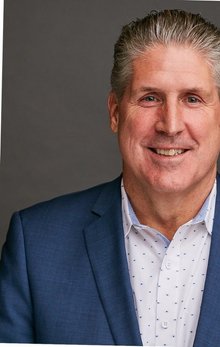
CEO: Matt Pohlman
Headquarters: Michigan, US
Founded: 1982

The Automotive Industry Action Group (AIAG) is an industry association that aims to be a collaborative hub for automakers, suppliers and service providers.
Its primary mission is to establish universally adopted standards, reduce risk and drive efficiency across the global automotive supply chain.
The association represents more than 4,500 member companies globally and supports a range of businesses from OEMs to packaging suppliers.
AIAG aligns its industry advocacy and standard-setting efforts around three core pillars: corporate responsibility, supply chain and quality.
2. Global Electronics Association
President and CEO: Dr. John W. Mitchell
Headquarters: Illinois, US
Founded: 1957
The Global Electronics Association, formerly known as IPC (Institute of Printed Circuits), is a major industry association dedicated to advancing the global electronics manufacturing community.
It represents more than 3,200 member companies spanning across the globe and operates from offices in North America, South America, Europe and the Asia-Pacific region.
The association serves the full electronics value chain, from OEMs to PCB manufacturers and materials suppliers.
Its top advocacy priorities, through the newly formed Global Electronics Policy Council (GEPC), include safeguarding predictable access to global markets and building robust workforce pipelines.
The GEPC unites top electronics companies like TSMC, Jabil and Flex to speak with a unified voice on global trade, investment and supply chain policies.
1. SEMI
President and CEO: Ajit Manocha
Headquarters: California, US
Founded: 1970
Semiconductors are at the heart of almost all modern manufacturing, from putting AI assistants in new cars to the machines used on shop floors every day.
Originally known as Semiconductor Equipment and Materials International, SEMI is a global industry association serving the manufacturing supply chain for the micro- and nano-electronics industries.
It facilitates industry growth by setting global technical standards, organising trade events, providing market research and leading public policy advocacy.
SEMI connects more than 3,000 member companies and 1.5 million professionals worldwide, serving the entire semiconductor and electronics design and manufacturing supply chain.
Its policy strategy focuses on investment certainty and tax policy, workforce development and supply chain resilience and trade policy.
In April 2026, SEMI's market intelligence wing released a major report revealing that global semiconductor manufacturing equipment billings reached a record US$135.1bn in 2025, a 15% year-over-year increase. The organisation highlighted that this surge was heavily driven by the industry rushing to build out advanced logic and high-bandwidth memory capacity to support AI architectures.
Company portals













Executives
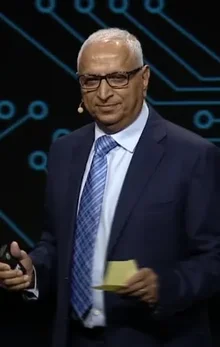
Ajit Manocha
President and CEO
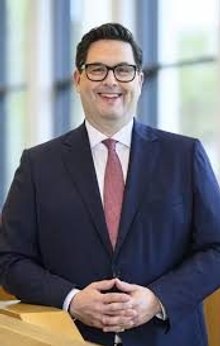
Bertram Kawlath
President
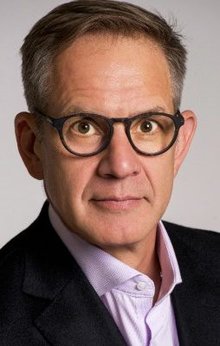
Dr. John W. Mitchell
President and CEO
Dr. Markus Kamieth
CEO
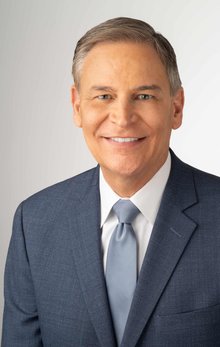
Jay Timmons
President and CEO
Jeff Burnstein
President
Matt Pohlman
CEO
Ola Källenius
CEO

Peter Leibinger
President
Rebecca R. Taylor
President