How Han-Jong Hee Drove Smarter Manufacturing at Samsung
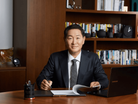
Han Jong-hee, who died following a heart attack on 25 March, was a pivotal figure in the evolution of Samsung Electronics and the global consumer electronics industry.
His career, spanning nearly four decades including his role as Samsung Co-Ceo, was marked by significant advancements in mobile display technology, the integration of AI and IoT into consumer electronics and the growth of broader industry sustainability.
Mr Han, who was 63, showed interested in technology and engineering from an early age, earning a degree in electrical engineering from Inha University in Incheon, South Korea.
This education informed both his technical expertise and appreciation for innovation, providing the foundation for him to drive major advancements in the electronics industry.
Becoming Co-Ceo at Samsung Electronics in 2022, Mr Han was highly respected at the organisation for his visionary leadership, technical acumen and unwavering commitment to excellence.
Colleagues described him as a forward-thinking and meticulous strategist who balanced ambition and humility, playing a crucial role in maintaining Samsung’s competitive edge in the global electronics market.
Here's a closer look at the manufacturing impact he had during his life and career.
Revolutionising display technology
Mr Han's journey with Samsung began in 1988 when he joined the company's visual display division. His profound understanding of engineering and technology quickly propelled him into key leadership roles, where he worked to develop and commercialise groundbreaking display technologies.
Most notable of these technologies was Samsung's QLED (Quantum Dot Light Emitting Diode) and MicroLED display technologies, innovations which completely redefined the television and display industries. Offering superior picture quality, energy efficiency and durability these innovations would catapult Samsung into its status as a world leader in television manufacturing.
Gaining this title in 2006, Samsung Electronics has maintained it for the last 18 years, with market research firm Omdia reporting Samsung had a 30.1% share of the global tv market in 2023.
Integrating AI and IoT into products and factories
At the helm of Samsung Electronics Device eXperience (DX) Division, Mr Han helped create the foundation of Samsung's technological and manufacturing leadership today.
Recognising the transformative potential of AI and IoT, Mr Han expressed his desire to build a " AI-driven company", spearheading efforts to embed cutting-edge technologies into Samsung's product line up.
“I’m proud of how we have introduced new technologies and intelligence to the home, connected key devices and set the standard for the home of the future,” he said at CES 2025.
“This year at CES, we are reinforcing our commitment to delivering personalised experiences through our widespread implementation of AI and we will continue this journey of AI leadership in the home and beyond, not just for the next decade, but for the next century.”
A key example of this AI leadership is visible with Samsung's smart TVs, which now suggest content based on user preferences using advanced algorithms, making entertainment more personalised and engaging.
Additionally, Samsung's home appliances like refrigerators and washing machines have been equipped with sensors and connectivity features, enabling them to adapt to user behaviours and optimise energy consumption.
Mr Han's vision was to create a seamless connected ecosystem of device communication, providing users with a cohesive and intuitive experience. This not only enhanced convenience but also positioned Samsung as a leader in the smart home revolution.
Another critical arena where Samsung leads today is in the development of smart factories.
Samsung has a wealth of global manufacturing sites, from its semiconductor plants in South Korea and China to its largest electronics factory in Vietnam, where AI, IoT technologies, automation and 5G connectivity have been effectively pursued and implemented.
But the company took this further in 2015, launching its Smart Factory Support Initiative in collaboration with the Korean Government to support Korean SME's with establishing and developing smart factories through technological expertise and guidance.
Under Mr Han's leadership this program has grown and undergone acceleration, with Samsung recently partnering with automotive leader Hyundai to help it implement Samsung's private 5G solutions across operations.
The end goal of the partnership was to elevate Hyundai's factory automation, optimise production lines, and enhance communication between industrial devices such as Automated Guided Vehicles (AGVs).
As smart factory adoption continues to shape the competitive landscape of manufacturing, Mr Han guided Samsung to not only enhancing its own products and facilities with this in mind but to also offer the wider sector critical support and collaboration.
Prioritising eco-friendly manufacturing
In addition to his contributions to Samsung's technological and manufacturing development, Mr Han also championed the integration and popularisation of eco-friendly manufacturing practices at the company.
Under his guidance, Samsung introduced innovations such as solar-powered remote controls and eco-conscious packaging, reflecting a commitment to environmental responsibility.
Mr Han also pledged Samsung’s commitment to achieving carbon neutrality by 2050 and reducing electronic waste through comprehensive recycling programmes.

This commitment has led to a growth of energy-efficient products at Samsung Electronics, which, in its 2024 Sustainability Report, reiterated its ambition to achieve net-zero Scope 1 and 2 emissions by 2050.
Crucially, the report stated that this target had been set at 2030 for Samsung's Device eXperience (DX) division, responsible for manufacturing air conditions, monitors and televisions among other key products.
In December 2021, Han was appointed Vice Chairman and CEO of Samsung Electronics, overseeing this then newly established division.
At the end of 2023 the DX division achieved 93.4% renewable energy conversion, using 100% renewable energy to power Samsung's global manufacturing facilities in the United States, Europe, Korea, China, Brazil, India and Vietnam.
Mr Han's work in the visual display division created a critical precedent for this sustainable innovation, which he continued to drive as Co-CEO.
Samsung maintains a position today as one of the most iconic, successful and popular manufacturers of electronics in the world.
This is thanks to its relentless pursuit of innovation and improvement, a quality of the company shaped by Han Jong-Hee and part of the legacy he leaves behind.
Explore the latest edition of Manufacturing Digital and be part of the conversation at our global conference series, Manufacturing LIVE.
Sign up to our weekly newsletter here.
Discover all our upcoming events and secure your tickets today.
Manufacturing Digital is a BizClik brand.