
Why its Time to Expand your Investment in Industrial Robots
As global industries continue to evolve, manufacturers face increasing pressure to enhance efficiency, maintain quality and remain competitive.
Industrial robots are already playing a vital role in modern manufacturing, but this year their importance will grow even further.
With greater advancements in automation, artificial intelligence and machine learning, manufacturers that fail to expand their use of robotics risk falling behind.
Here’s why investing in industrial robots is more essential than ever.
Addressing labour shortages & rising costs
One of the biggest challenges facing manufacturers is the ongoing shortage of skilled workers.
We all know the struggle to to recruit and retain staff, particularly for repetitive or physically demanding roles.
At the same time, labour costs continue to rise due to wage inflation and regulatory changes.
By increasing the use of industrial robots, manufacturers can reduce dependency on manual labour while ensuring consistent productivity.
Robots can handle tasks such as assembly, welding and packaging with precision and speed, allowing human workers to focus on more complex and strategic responsibilities.
This shift not only improves efficiency but helps companies manage labour costs effectively.

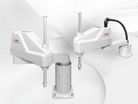
The power industrial robots to address skilled labour shortages is evident in Mitsubishi Electric's new MELFA RH-10CRH and RH-20CRH SCARA robots, which enable manufacturers to more flexibly adopt digital manufacturing.
These new compact and lightweight robots enhance industrial automation through high-speed operation, easy installation, advanced sensors and exceptional efficiency.
“With the MELFA RH-CRH series, we’ve created a solution that delivers exceptional performance and addresses the practical challenges our customers face in modern manufacturing,” said Keisuke Matsumura, Development Section Team Leader, Mitsubishi.
“These robots alone demonstrate our commitment to innovation by helping manufacturers enhance productivity and efficiency."
Industrial robots boost productivity and safety, enabling manufacturers to scale and digitalise without physical site expansion.
They are a vital tool to accelerate your digital transformation and sustainability journey, whilst optimising the production line and your product output.
Enhancing precision & product quality
Modern consumers expect high-quality products and manufacturers must meet these expectations to remain competitive.
Industrial robots offer unmatched precision, reducing the risk of human error and ensuring consistency in production.
This is particularly important in industries like automotive, electronics and pharmaceuticals, where even the smallest defects can have significant consequences.
Robots equipped with advanced sensors and AI-driven quality control systems can detect imperfections in real time, preventing faulty products from reaching the market.
This leads to fewer recalls, lower waste levels and greater customer satisfaction.
By integrating robots into manufacturing lines, businesses can enhance their reputation for quality and reliability.
Boosting efficiency & scalability
In 2025 as the market continues to shift towards
and face supply chain disruption, speed and flexibility will determine manufacturing success.
With supply chains becoming more dynamic and customer demands shifting rapidly, manufacturers need production systems that can adapt quickly.
Industrial robots provide the scalability required to meet fluctuating demand without compromising efficiency.
Automated systems can operate around the clock, eliminating downtime and increasing output.
Robots can also be reprogrammed to perform different tasks, allowing manufacturers to switch between product lines with minimal disruption.
This level of agility is essential for businesses looking to stay ahead in competitive markets.
Supporting sustainability goals
Sustainability is no longer a choice but a necessity for manufacturers.
Governments and consumers are demanding greener practices and businesses must find ways to reduce waste, energy consumption and emissions.
Industrial robots contribute to sustainability by optimising resource use and minimising material waste.
Robots can perform precise cuts, apply coatings more efficiently and reduce energy usage through optimised movement patterns.
They can help you optimise production lines, which contributes to energy savings and broader overall efficiency.
They are one of the most critical digital tools manufacturers can utilise to advance their sustainability journey.
Manufacturers that continue to invest in and refine their use of industrial robots will gain significant competitive advantages.
From addressing labour shortages to improving quality and efficiency, automation offers tangible benefits that cannot be ignored.
As technology continues to advance, those who invest in robotics now will be best positioned for long-term success in an increasingly digital and automated world.
Explore the latest edition of Manufacturing Digital and be part of the conversation at our global conference series, Manufacturing LIVE.
Sign up to our weekly newsletter here.
Discover all our upcoming events and secure your tickets today.
Manufacturing Digital is a BizClik brand.