How has Walmart Fared Against 2025 Sustainability Pledge?

Twenty years ago, Walmart’s then-CEO Lee Scott delivered a speech that would set a new course for corporate sustainability and have lasting effects on global supply chains.
In 2005, he committed the retail giant to a trio of ambitious environmental goals: to be powered by 100% renewable energy, create zero waste and sell products that sustain resources and the environment.
This pledge came a decade before the Paris Agreement and in the same year the Kyoto Protocol was enacted, making the targets particularly forward-thinking for the era.
"These goals are both ambitious and aspirational, and I'm not sure how to achieve them, at least not yet," Lee explained at the time, highlighting the nascent state of corporate environmental strategy.
Despite changes in leadership over the subsequent two decades, Walmart has continued to pursue this vision making measurable progress in certain areas while facing major hurdles in others.

Assessing Walmart's energy and waste goals
Walmart has made headway on its operational targets. According to its latest ESG report, 48.5% of the organisation's global electricity requirements are now met by renewable sources.
Its Scope 1 and 2 emissions have also seen a reduction of 18.1% against a 2015 baseline, showing progress toward Lee's first goal is ongoing.
On the second target, Walmart has achieved substantial results. It currently diverts 83.5% of its global waste from landfill or incineration.
However critics point out that, with its inflation-adjusted global revenue growing 44% to US$681bn since 2015, Walmart has the resources to accelerate its sustainability initiatives.
The product sustainability hurdle
The third goal, focused on selling more sustainable products, has proven to be the most challenging and holds the greatest implications for manufacturing and the broader supply chain.
Jon Johnson, a professor at the University of Arkansas's Walton College of Business, offers a critical evaluation of Walmart's performance.
"I would give them an A or A-minus on their waste and energy goals," he says. "I give them a C on their product goals, and that would be a generous C."
Jon, who co-founded The Sustainability Consortium in 2009 to create metrics for evaluating product impacts, said Walmart did not fully leverage this data.
"Walmart never used that information to make procurement decisions at any scale that had the effect we were hoping it would," he says, indicating a disconnect between stated goals and purchasing practices.
He adds: "And there's some products where the juice was not worth the squeeze. We should have been more focused."
Walmart's ripple effect on the wider industry
Despite not fully achieving all its own objectives, Walmart's sustainability push has acted as a catalyst for change across the retail and manufacturing sectors.
Elizabeth Sturcken, VP for Net Zero Ambition and Action at the Environmental Defence Fund, highlights Walmart's 2017 chemical footprint goal as a key example of its influence.
"You got very real ripple effects throughout the entire industry," she says, noting that competitors like Target and Dollar General introduced similar commitments creating a widespread impact on suppliers.
Ken Cook, president of the Environmental Working Group (EWG), described how a 2014 campaign led Walmart to mandate that its suppliers limit certain chemicals in household and personal care products.
"EWG is not interested in things that don't make landscape-level changes," he says. "This is what Walmart has provided."
Walmart still faces scrutiny over issues such as supply chain traceability for deforestation and an increase in Scope 3 emissions of approximately 4% over the past two years.
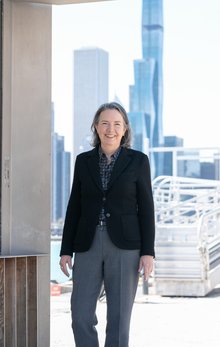
Kathleen McLaughlin, the current CSO, defends Walmart's direction.
"We're not a perfect company," she says. "One of the things that is pretty deep at Walmart, though, is really listening to everybody, to critics and to stakeholders.
"The easier things have been tackled. We're now in the throes of true system transformation, and that's hard work."
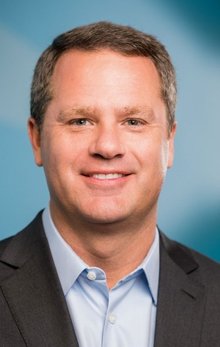
Current Walmart CEO Doug McMillon credits Lee with establishing this path.
"He challenged us to think differently about leadership and to use our influence and resources to make this country and the planet an even better place for everyone," says Doug McMillon.
"His courage and vision set Walmart on a path that continues to shape how we serve today."
Company portals

Executives
Doug McMillon
President & CEO
Kathleen McLaughlin
Board Chair