AI Robots & Talent Gaps: Top Manufacturing Stories This Week

6 January
Hyundai Motor Group says it plans to accelerate its business with “cutting-edge” AI robotics across its manufacturing sites worldwide.
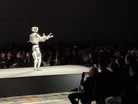
Atlas, a humanoid robot developed by Boston Dynamics, was shown off at the Consumer Electronics Show (CES) in Las Vegas, US.
Hyundai says it plans to use these robots in its factories from 2028 and establish a production system capable of manufacturing 30,000 robot units each year.
Boston Dynamics, of which Hyundai owns a majority stake, has partnered with Google DeepMind to accelerate the technological development of these robots.
Zachary Jackowski, Vice President and General Manager of Atlas at Boston Dynamics, says: “The convergence of robotics and AI represents more than a technological advancement. It is a transformative innovation that will make human life safer and more enriching."
5 January
After 2025 was defined by contraction and trade uncertainty, Deloitte says 2026 could be a critical inflection point.
The firm’s 2026 Manufacturing Industry Outlook says that the industry is moving from experimental AI pilots to at-scale implementation.
Success, it says, depends on balancing aggressive technology investment with highly adaptive workforce strategy.
“US manufacturing faced notable challenges in 2025; however, our latest outlook identifies opportunities on the horizon for 2026,” says John Morehouse, Research Leader at the Deloitte Research Center for Energy and Industrials, on LinkedIn.
6 January
The Chinese toymaker Pop Mart experienced a significant surge in attention during the summer of 2025, driven by the Labubu craze that captured global consumer interest.
The launch of Labubu 3.0 in June 2025 proved particularly lucrative, adding US$1.6bn to the net worth of Wang Ning, the company's CEO and founder.
These distinctive 'monsters' fuelled rapid retail expansion worldwide, with Labubu-dedicated vending machines appearing in prestigious locations such as Selfridges in London.
The phenomenon reached its peak between June and August 2025, with retailers reporting unprecedented demand.
Now, as Pop Mart pursues further growth through international production expansion, questions are emerging about whether this success represents sustainable momentum or just a passing trend that could soon lose its appeal.
7 January
The global automotive manufacturing market is valued at nearly US$3tn, contributing approximately 3% to the world’s total GDP, according to the International Monetary Fund.
However, the sector is facing its biggest disruption in a century as value shifts from traditional hardware to software and batteries.
Factories around the world are being reinvented into digital, efficient and vertically integrated hubs to tackle these challenges.
Manufacturing Digital has ranked the top automotive companies by vehicles sold in 2024.
8 January
Caterpillar and NVIDIA are expanding a collaboration to enhance manufacturing systems through physical AI.
The partnership focuses on deploying next-generation technology across construction, mining and power equipment used in factories around the world.
Joe Creed, CEO of Caterpillar, says: “As AI moves beyond data to reshape the physical world, it is unlocking new opportunities for innovation.
“Caterpillar is committed to solving our customers’ toughest challenges by leading with advanced technology in our machines and every aspect of business.”







Executives
Joe Creed
Chief Executive Officer
John Morehouse
Research Leader in Manufacturing, Deloitte Research Center for Energy and Industrials
Zachary Jackowski
General Manager - Atlas