
Will Avery Dennison’s Factory Redefine Sustainability?
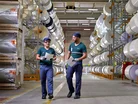
Avery Dennison’s manufacturing operation in Guangzhou has become the first facility in the pressure-sensitive labels sector to receive a national-level “green factory” accreditation in China.
This distinction is rare in one of the world’s most industrialised economies, where only about 6,000 factories have earned the certification so far. In 2025 alone, just 1,300 sites currently meet the required standards.
The recognition points to operational changes carried out over several years, all aimed at aligning manufacturing excellence with environmental targets.
For Avery Dennison, this milestone strengthens its position in China’s competitive industrial landscape, where sustainability increasingly influences policy and production standards.

Meeting high national manufacturing standards
Achieving green factory status in China means satisfying a rigorous set of criteria covering energy efficiency, waste management, emissions control and resource usage. Avery Dennison’s Guangzhou site demonstrates progress across all these areas.
Visitors to the site might focus on the facility’s precision coating and die-cutting lines, or its automated logistics systems.
But it is the underlying structural improvements that secure the accreditation. These include closed-loop water recycling systems, emissions control infrastructure and a systematic approach to material reuse.
Mike Colarossi, Head of Enterprise Sustainability at Avery Dennison, describes the achievement plainly: "This is proof that sustainability and industrial performance can go hand in hand. This is leadership in action."
The comment reflects a broader effort to merge performance targets with environmental ones, especially in a sector where output quality and production volume remain business priorities.
Factory goals aligned with climate and efficiency targets
The Guangzhou site forms part of Avery Dennison’s wider strategy to hit its 2025 and 2030 sustainability targets.
These goals are aligned with seven of the United Nations Sustainable Development Goals (SDGs), and include verified product standards, emissions reductions and resource sourcing commitments.
In terms of product portfolio, the company aims to have all core product categories comply with the Sustainable ADvantage standard, a third-party verification. By 2024, 78% of its Solutions Group and 67% of its Materials Group met this requirement.
On emissions, Avery Dennison has committed to cutting Scope 1 and 2 greenhouse gas emissions (those directly produced by operations and from purchased electricity) by 70% from a 2015 baseline.
It also targets a 30% cut in Scope 3 emissions, which come from its supply chain, against a 2018 baseline. So far, Scope 1 and 2 emissions are down by 54%, with the business targeting net zero by 2050.
The company also focuses on material sourcing, aiming to use 100% certified deforestation-free paper fibre. This figure has moved from 45% in 2015 to 97% today.
On waste, 91% of sites are now landfill-free, and 68% of all waste is recycled. Avery Dennison is also tracking water use at facilities in areas of high water stress, achieving a 17% increase in water efficiency compared to its 15% target.
These operational and environmental changes reflect a strategy that embeds sustainable practices into the core of the company’s industrial processes, rather than treating them as standalone targets.
Innovating for recyclability in packaging and labelling
Beyond operational improvements, Avery Dennison has introduced new materials designed for recycling and reuse. The company has developed the first radio-frequency identification (RFID) label to receive APR Design for Recyclability recognition from the Association of Plastic Recyclers in North America.
This approval confirms that the label meets recycling guidelines for polyethylene terephthalate (PET), a plastic commonly used in consumer goods packaging.
The breakthrough comes from combining Avery Dennison’s CleanFlake adhesive with RFID label technology. This enables the label to separate cleanly during mechanical recycling, reducing contamination and improving PET recovery.
According to Pascale Wautelet, Vice President, Global R&D and Sustainability at Avery Dennison Materials Group: “RFID technology is essential for the effective and sustainable management of modern supply chains, supporting brands with greater inventory visibility, product traceability and loss prevention.”
"APR’s recognition marks a pivotal step forward in advancing circular packaging and supporting the global transition to sustainable material use.
“As consumer goods companies set increasingly ambitious recycling targets, Avery Dennison remains committed to helping our customers reduce waste by investing in innovation and designing products that can be effectively recycled."
This development addresses a key manufacturing challenge: how to ensure that smart packaging solutions like RFID labels do not interfere with recycling systems.
Given that PET is widely used across sectors from beverages to cosmetics, the ability to recycle these materials without issue carries clear implications for large-scale production and material recovery.
Avery Dennison expects to make the label widely available later in the year, while also working with certifiers to achieve broader market recognition across different regions.
The company continues to develop materials that support recycling, composting or reuse, ensuring that single-use products in packaging and apparel can meet changing environmental standards.
