
Boeing, Fanatics & NVIDIA: Top Manufacturing News This Week

8 June
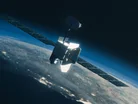
Boeing and its subsidiary Millennium Space Systems are scaling production and expanding their combined satellite portfolio to deliver on current commitments and meet rising demand across defence and commercial markets.
Millennium has launched 16 satellites and claims a 100% success rate on its website. “This is about more than one product,” says Tony Gingiss, CEO of Millennium Space Systems.
“We are building the production depth, common architecture and capacity to scale with demand. That includes expanding into mission areas where customers want more capability, while staying focused on execution and delivery across the backlog already in front of us.”
11 June
On the outskirts of Arras in the north of France is a factory producing most of the world’s Häagen-Dazs ice cream. Lush fields and cows lined my journey to the plant, before we were greeted by the General Mills team.
Established in 1992, the primary global manufacturing facility for Häagen-Dazs supplies more than 90 countries across Europe, Asia, Australia and South America and produces nearly 80 million litres of ice cream each year.
“When we first started, we were producing classic pints and large tubs for food service,” explains Plant Director Nicolas Cayeux. “In 1993 we started making stick bars and expanded into mini-cups in 1994."
8 June
The world's largest company by market cap, NVIDIA, and South Korean manufacturer SK Hynix announced a multiyear technology partnership to advance 'next-generation' memory for the global AI factory buildout and accelerate semiconductor design and manufacturing.
The agreement supports supply for advanced memory, addressing the extended development cycles, advanced fabrication and capital investments to sustain the global buildout of AI factories.
In April of 2026, the Financial Times reported that SK Hynix plans to significantly increase its capital spending this year in response to long-term demand growth as big tech companies spend hundreds of billions of dollars on AI hardware.
10 June
In 2022, the FIFA World Cup in Qatar engaged an estimated five billion people globally. Across just five host cities and eight stadiums, more than 3.4 million people attended matches, driving record global sales for merchandise. Both in stadiums and around the world, the 2026 competition is expected to grab the attention of more fans than ever before.
For the first time, the tournament is spanning three countries simultaneously and features 48 competing nations with matches across 16 cities. Snacks, drinks, shirts and scarves are just some of the items that need to be manufactured, transported and delivered to fans in the right places at the right times. Predicting and meeting demand, particularly on this scale, is no easy feat across the supply chain.
See the full story in the June 2026 edition of Manufacturing Digital.
11 June
Mercedes-Benz is expanding into the European air defence industry in partnership with TYTAN Technologies. The companies signed an Memorandum of Understanding (MoU) at at ILA 2026 on the 10th June 2026.
TYTAN, which is headquartered in Germany, is a startup focussed on building what is calls “AI-powered counter-drone systems”.
This is not the first European carmaker reported to be considering a move into the defence industry, with Volkswagen reportedly in talks earlier this year with Rafael Advanced Defence Systems to switch production from one of its manufacturing sites in Germany from cars to missile defence components.
Company portals











Executives

Nicolas Cayeux
Plant Director, Häagen-Dazs Arras

Tony Gingiss
CEO