How Rockwell Automation kept 90% of Waste Out of Landfill
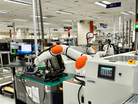
Rockwell Automation's 2025 Sustainability Report highlights its environmental, social and governance (ESG) and sustainability practices, strategies and achievements.
The company has exceeded its goal of diverting 90% of waste from landfills alongside reducing packaging volume to lower costs.
It also focusses on embedding ESG in digital transformation, using AI and digital twins to help make faster, smarter decisions on energy management.
Blake Moret, Chairman and CEO of Rockwell Automation, says: “Today’s industrial landscape is evolving faster than ever.
“Global supply chains are shifting, production is moving closer to customers and manufacturers are navigating increasing complexity.
“We are proud of the progress we’ve made and we remain committed to transparency, accountability and continuous improvement.”
Rockwell's sustainability goals
Rockwell follows a Triple A framework designed to support both its internal sustainability initiatives and those of its clients.
This framework encompasses three distinct phases – assess, advance and accelerate – which work in tandem to address all aspects of ESG commitments.
The manufacturer submitted both near-term and long-term sustainability objectives to the Science Based Targets initiative (SBTi) in December 2025, with plans to announce these goals following validation.
During 2025, the company's Scope 1 and 2 market-based normalised emissions remained consistent with figures from the previous year.
Rockwell intends to continue evaluating and reporting on its Scope 3 emissions, which account for approximately 99% of its overall carbon footprint.
These emissions originate from the company's value chain suppliers, logistics partners and customer use of its products.

The company plans to contribute to reducing Scope 3 emissions through the provision of energy-efficient products, supporting customers in achieving energy efficiency, enhancing transparency in reporting and aligning with SBTi objectives.
During 2024, Rockwell Automation surpassed its target of diverting 90% or more of its waste from landfill.
This achievement came through recycling, reuse and energy reclamation efforts, alongside recycling 14% of its hazardous waste.
Renewable energy at Rockwell
Rockwell is pursuing smarter energy use across its facilities by expanding its renewable energy deployment.
Two large solar panel systems have been installed at its CUBIC facility in Aabybro, Denmark to help power its operations.
The annual emissions savings from this installation could reach 270 tonnes CO₂e, with excess solar energy being supplied to the local grid.
Emmanuel Guilhamon, Vice President, Sustainability at Rockwell Automation, adds: “We believe the path to a more sustainable future is paved with innovation.
“That’s why we’re investing in digital tools, automation and AI that help us and our customers make smarter, faster decisions.
“These technologies are transforming how we manage energy, optimise operations and reduce environmental impact.”
Circular packaging solutions
Following its five-year sustainable packaging strategy, Rockwell is working on "right-sizing" its packaging, reducing overall volume and incorporating recycled and recyclable materials.
This approach could help customers close the material loop whilst lowering carbon emissions, landfill waste and costs.
In 2024, the company met its objectives of ensuring all new packaging came from sustainable or renewable sources, 100% of its suppliers providing sustainable forestry certifications and all corrugated packaging containing up to 70% recycled content.
“Setting packaging sustainability goals is smart business,” says Brad Gruneberg, Product Engineer, Packaging at Rockwell Automation.
“Through thoughtful design, Rockwell Automation demonstrates environmental stewardship by using sustainable materials that protect our products, meet global regulations, safeguard the planet and build quality and trust with customers worldwide.”
Strengthening cybersecurity measures
Cybersecurity is a key concern for Rockwell as the company aims to address cyber risks and satisfy compliance standards.
The manufacturer is engaging with the European Union (EU) through trade groups and other advisory organisations to interpret emerging cyber regulations.
Through this process, Rockwell can evaluate its product portfolio to ensure maximum compliance whilst working with customers to plan for regulatory requirements.
The company aims to enhance its security resilience through collaboration, including its strategic alliance with HackerOne, the global leader in hacker-powered security.
This partnership enables potential risks to be identified and reported in Rockwell's industrial automation products and services.
The collaboration strengthens the company's ability to proactively address vulnerabilities before they can be exploited.
Tony Baker, Vice President and CPSO, Digital Trust at Rockwell Automation, says: “Our partnership with HackerOne enhances our Product Security Program.
“This collaboration, alongside our secure development lifecycle processes and ongoing efforts to comply with global cybersecurity standards, reaffirms our commitment to the highest levels of product security.”
Company portals

Executives
Blake Moret
Chairman and Chief Executive Officer
Brad Gruneberg
Project Engineer - Packaging
Emmanuel Guilhamon
Global Sustainability VP
Tony Baker
Vice President, Digital Trust & CPSO