Tesla, ABB & NVIDIA: This Week's Top Manufacturing Stories

2 February
Tesla CEO Elon Musk continues to project confidence in the company's trajectory despite financial headwinds, with the electric vehicle (EV) manufacturer reporting its second consecutive quarterly decline.
Annual revenue dropped to US$94.8bn, yet Musk has signalled substantial capital investments in AI, infrastructure and humanoid robotics while rebranding the company's mission from 'Sustainable Abundance' to 'Amazing Abundance'.
The company's profits declined 61% in the final quarter of 2025, though this has not deterred Musk's spending plans.
"We're making big investments for an epic future," he said during a Q&A call with investors held on 28 January.
2 February
Manufacturers can now access a modern pathway to system advancement through ABB's Automation Extended programme, which offers a strategic approach to technological evolution.
The programme is built on ABB's established platforms and protects current investments whilst delivering a contemporary automation ecosystem designed for advanced analytics, AI and IoT integration.
According to ABB, the programme enables technologies to be adopted at the pace that suits individual customers without introducing operational risk.
The company explains: “Building on ABB’s long-standing leadership with the world’s largest DCS installed base and vision in process automation, Automation Extended outlines how future automation capabilities can be introduced progressively."
4 February
Dassault Systèmes and NVIDIA have launched a long-term strategic partnership designed to build a shared industrial architecture for mission-critical AI across multiple industries
The collaboration brings together Dassault Systèmes' Virtual Twin technologies with NVIDIA's AI infrastructure, open models and accelerated software libraries to create science-validated Industry World Models.
These models form the foundation of the agentic 3DEXPERIENCE platform, enabling virtual companions that support professionals in making informed decisions across engineering, manufacturing, biology and materials science.
“We are entering an era where AI does not just predict or generate, but understands the real world," explains Pascal Daloz, CEO of Dassault Systèmes.
4 February
As production lines become increasingly digitised and operational technology (OT) networks expand their device connectivity, manufacturers face growing cybersecurity challenges.
Factory systems that once operated in isolation are now connected, creating vulnerabilities that expose industrial control systems to cyber threats capable of disrupting production and compromising workplace safety.
Fortinet's 2025 State of Operational Technology and Cybersecurity Report reveals how manufacturers are responding to this converged threat environment through elevated executive accountability and strategic approaches combining visibility, segmentation and AI-powered detection.
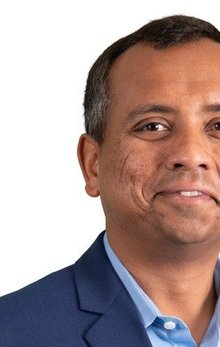
“The seventh instalment of the Fortinet State of Operational Technology and Cybersecurity Report shows that organisations are taking OT security more seriously,” says Nirav Shah, Senior Vice President, Products and Solutions at Fortinet.
5 February
Elon Musk's SpaceX is acquiring his startup xAI in a deal which values the combined entity at approximately US$1.25tn.
The aim of the acquisition is to manufacture AI satellites that operate as solar-powered orbital data centres in space.
The plan aims to address the substantial power and water consumption required for large-scale computing operations.
By relocating these resource-intensive processes to space, the initiative seeks to tap into solar energy at a scale far beyond what terrestrial facilities can achieve.
Current measurements show that Earth intercepts around 173,000 terawatts of solar energy, which represents 10,000 times more energy than the planet currently consumes.
"To harness even a millionth of our Sun's energy would require over a million times more energy than our civilisation currently uses," said Musk as he announced the combination.






Executives
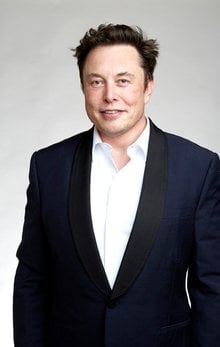
Elon Musk
Tesla CEO
Nirav Shah
Senior Vice President, Head of Products and Solutions Marketing
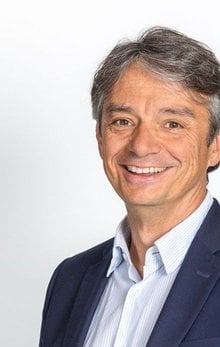
Pascal Daloz
CEO