Uber, Lucid and Nuro Unite on Autonomous Fleet Rollout Plan
Driverless vehicles are edging closer to deployment after years of testing and development, particularly in high-risk sectors like mobility.
Autonomous vehicles (AVs) must pass extended feasibility phases before they hit the roads, but real-world launches are now coming into view.
Uber is now partnering with luxury electric vehicle (EV) maker Lucid and AV technology specialist Nuro on a global robotaxi project they describe as a "next-generation premium global robotaxi programme".
A bold target for Uber's AV future
Uber plans to launch more than 20,000 Lucid vehicles with Nuro’s self-driving systems over the next six years.
The initial rollout is expected to begin in a large, unnamed US city next year. That would create a fleet size larger than what many traditional taxi operators manage across entire nations.
This plan is backed by hundreds of millions of dollars in investment from Uber into both Lucid and Nuro, which suggests this is more than just another trial. The collaboration hinges on the distinct expertise that each company brings.
Lucid supplies the vehicles. Nuro delivers the self-driving tech. Uber connects the service to a vast existing network of riders.
Lucid's Gravity and its AV-ready design
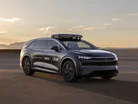
Lucid's Gravity SUV will be the vehicle of choice for the fleet. It offers a 450-mile range, as estimated by the US Environmental Protection Agency (EPA), putting it towards the top of what current EV technology offers.
Marc Winterhoff, interim Chief Executive at Lucid, sees this as a validation of the company’s design approach: "This investment from Uber further validates Lucid's fully redundant zonal architecture and highly capable platform as ideal for autonomous vehicles, and our industry-leading range and spacious well-appointed interiors, as ideal for ridesharing."
Lucid’s platform is built with a redundant zonal architecture, a system that reduces risk by having backup electronics spread across the car. This structure supports safety-critical operations, which is essential for autonomous use.
The SUV also comes with a spacious cabin and interior features aimed at comfort, aligning well with the premium service Uber intends to offer. Its electronic systems are also built to adapt as software improves, allowing the technology to evolve over time.
Nuro's proven self-driving tech
Nuro brings its ‘Nuro Driver Level 4’ system to the project. Level 4 autonomy refers to a category of AV capability defined by the Society of Automotive Engineers (SAE) in which the vehicle can drive itself without human input within set conditions.

This places it just one level below full autonomy.
Nuro already has five years of experience operating AVs in several US cities, giving it a solid performance history and access to data from thousands of journeys.
These lessons give Nuro a head start in refining safety, navigation and system reliability.
Nuro co-founder and Chief Executive Jiajun Zhu says: “We believe this partnership will demonstrate what's possible when proven AV technology meets real-world scale.”
Uber brings the scale
Uber’s global network is the final piece. It operates in 70 countries and facilitates 34 million rides per day. This level of reach provides the infrastructure needed to introduce AVs to the masses.
Chief Executive Dara Khosrowshahi sees this as a natural next step. "Autonomous vehicles have enormous potential to transform our cities for the better," he says. “We're thrilled to partner with Nuro and Lucid on this new robotaxi programme, purpose-built just for the Uber platform."
Alongside the Lucid and Nuro partnership, Uber is also collaborating with Volkswagen to test AV models in Europe, underlining its broader commitment to autonomy.
If this project is successful, Uber’s existing base of millions of users could become the foundation for large-scale AV adoption.
The battle for robotaxi dominance may come down to who can deploy safely and at volume first. With strong financial backing, advanced technology and a direct route to riders, this collaboration between Uber, Lucid and Nuro could well be the one to watch.