Why is Volkswagen Cutting 50,000 Jobs?
Volkswagen has announced plans to cut 50,000 jobs across its German operations by 2030, as the automotive manufacturer grapples with a significant decline in profitability. The company reported a full year operating profit of US$10.4bn – down 53% from 2024 and the lowest profit margin the manufacturer has recorded since 2016.
These cuts will affect operations across Germany for the entire group, says Volkswagen. As Europe's largest carmaker, this could mean reductions across key brands including Audi and Porsche.
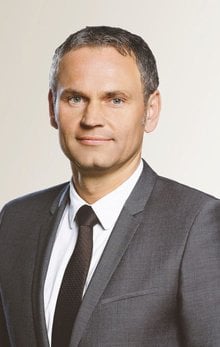
In a letter to shareholders, Oliver Blume, CEO of the Volkswagen Group, says: "In total, around 50,000 jobs are due to be cut by 2030 across the Volkswagen Group in Germany."
According to Oliver, this fall in profits is a product of "operating in a fundamentally different environment".
Trade tensions reshape manufacturing landscape
Manufacturing conditions for Volkswagen have become increasingly challenging following widespread geopolitical shifts, including US President Donald Trump's introduction of a 25% US tariff on car imports from Europe and Mexico.
The tariff has impacted the company's ability to maintain profitability whilst competing in one of its key markets.
The manufacturer also experienced significant market declines in China – one of its most important growth markets – with Chinese manufacturers seeing profit increases across 2025 and steadily increasing their presence in Europe.
A strategy shift at Volkswagen subsidiary Porsche may have also contributed to the profit decline, with the luxury carmaker pivoting on its EV product plans due to lower than anticipated demand. In 2025, Porsche saw a 98% fall in operating profit compared to the previous year.
For 2026, the company has been cautious in its predictions, forecasting the group's profit margin as being between 4% and 4.5% – which could mean 2026 profits could fall below the margin of 4.6% it achieved in 2025.
The company has said that 2026 may be informed by geopolitical conflict, with the conflict between the US and Iran potentially impacting demand for Audi and Porsche.
Oliver says: "We are simply seeing how volatile and fragile our world is, with new issues arising every month".
Manufacturing workforce faces restructuring
In December 2024, Volkswagen reached a deal with IG Metall, Germany's largest industrial union, to cut more than 35,000 jobs by 2039 in what was described as a "socially responsible manner". These cuts were set to save around US$16.6bn and were expected to be found through solutions such as early retirement and natural attrition.
Daniela Cavallo, Chairwoman of the General and Group Works Councils of Volkswagen AG, said of the agreement at the time: "No site will be closed, no-one will be laid off for operational reasons and our company wage agreement will be secured for the long term. We have achieved a rock-solid solution under the most difficult economic conditions."
The company's updated outlook, following this profit loss and future predictions of challenges from Volkswagen in "the macroeconomic environment, uncertainties regarding restrictions in international trade and geopolitical tensions," shows a redirection of this prior strategy.
Arno Antlitz, Chief Financial Officer of Volkswagen, says that the company will need to reduce costs more significantly through these cuts to improve its level of competitiveness.
He says that the company wants to: "Keep our combustion engine vehicles technologically competitive, continue investing in exciting electric vehicles and the latest software solutions for our customers, and expand our regional presence, particularly in the United States. We can only realise this if we continue to rigorously reduce costs, leverage group synergies, reduce complexity and thus sustainably increase profitability".
Company portals
Executives
Arno Antlitz
CFO
Oliver Blume
CEO