Top 10: Global Phone Manufacturers

Smartphone makers entered 2025 with renewed momentum after two years of uneven demand.
AI at the edge is becoming table stakes, from on-device assistants to camera enhancement and battery optimisation. Foldables are maturing beyond niche status, while premium mid-range devices push high-end experiences to lower price points.
China remains the engine of volume and innovation, but India, Africa and the Middle East are driving the next wave of growth as brands tune devices to local needs.
This week, Manufacturing Digital takes a look at the leading global phone manufacturers ranked by units sold.
10. Sony
CEO: Hiroki Totoki
HQ: Tokyo, Japan
Founded: 1946
Units sold (Q2 2025): Not disclosed
Sony, with US$85.395bn in revenue and 113,000 employees, manufactures its Xperia smartphones to meet high standards for multimedia performance.
Led by CEO Hiroki Totoki, Sony’s mobile production integrates technology from its imaging and entertainment divisions. Its factories focus on assembling 4K OLED displays and Alpha-grade camera sensors into slim smartphone bodies.
Manufacturing precision is essential for ensuring colour accuracy and sound fidelity. Xperia production combines Sony’s strengths in display, optics and audio hardware, making its assembly lines unique.
This integration of cross-divisional expertise positions Xperia devices as premium products tailored for users prioritising media quality and device craftsmanship.
9. Google
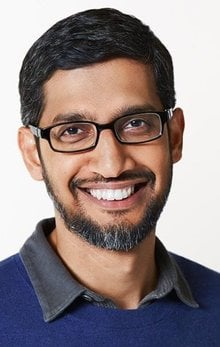
CEO: Sundar Pichai
HQ: Mountain View, US
Founded: 1998
Units sold (Q2 2025): Not disclosed

Google, led by CEO Sundar Pichai and supported by 190,000 employees, manufactures its Pixel phones through partnerships that emphasise AI-ready hardware integration.
With US$237.8bn in revenue, Google controls design while working with contract manufacturers for assembly.
Pixel devices require precise calibration for components like AI cameras and custom chips that support Google’s software. The manufacturing process includes close coordination between design and production teams to optimise for machine learning capabilities.
Assembly lines focus on tight tolerances and secure software installation. Though hardware isn’t its core business, Google’s controlled manufacturing approach ensures the Pixel delivers seamless integration with its digital services.
8. Lenovo (Motorola)
CEO: Yuanqing Yang
HQ: Beijing, China & Morrisville, US
Founded: 1984
Units sold (Q2 2025): ~13-14m, est. (global)
Lenovo combines its heritage in durable design with current innovations like foldable screens.
CEO Yuanqing Yang oversees a global manufacturing operation, producing smartphones under both Lenovo and Motorola brands. Its factories specialise in flexible display assembly and robust casing construction, inherited from Motorola's legacy of tough devices.
The manufacturing lines integrate hardware features from Lenovo’s broader tech portfolio, enabling product consistency. Foldable display production adds complexity, requiring precision tooling and quality assurance.
Lenovo’s ability to combine legacy engineering with new manufacturing techniques supports its competitiveness in smartphones alongside its laptop and tablet output.
8. Huawei
CEO: Ren Zhengfei
HQ: Shenzhen, China
Founded: 1987
Units sold (Q2 2025): ~14-15m, est. (global); China ~12.2m
Founded in 1987, Huawei tightly controls its smartphone manufacturing from component sourcing to final assembly. It produces many parts in-house, including chipsets and camera modules, giving it control over quality and performance.
Its factories in China manage large-scale assembly lines capable of supporting HarmonyOS integration and advanced hardware.
The company invests heavily in battery development and antenna design, ensuring devices meet performance standards despite market constraints.
Huawei’s vertical integration in manufacturing supports consistency across its product lines and enables customisation that meets user preferences in key regions.
6. OPPO
CEO: Tony Chen
HQ: Shenzhen, China
Founded: 2004
Units sold (Q2 2025): ~22-23m, est. (global)
OPPO focuses its manufacturing on high-speed production of design-led smartphones.
Founded in 2004, the organisation's facilities specialise in producing devices with SuperVOOC fast charging and high-end cameras, especially for the Find and Reno series.
Manufacturing includes rigorous testing of periscope lenses and image algorithms, catering to photography enthusiasts.
OPPO’s production strategy supports fast product turnover while retaining build quality.
Operating largely in China and India, OPPO aligns its production with premium design expectations, pushing aesthetic and performance standards in a tightly contested smartphone market.
5. Tecno Mobile (Transsion Group)
CEO: George “Zhu Zhaojiang”
HQ: Shenzhen, China; broad ops across Africa & Asia
Founded: 2006
Units sold (Q2 2025): ~24.6m (Transsion group)
Tecno Mobile manufactures smartphones with a focus on affordability and durability, tailoring devices for emerging markets.
Founded in 2006 and led by CEO George Zhu, the company generates around US$2.48bn in revenue.
Tecno commits to local manufacturing in regions like Africa and India, ensuring supply chains are close to end users. Its production strategy includes long battery life and rugged designs to suit local conditions.
By manufacturing closer to demand, Tecno optimises costs and responsiveness, helping it scale across 70+ countries while maintaining strong after-sales support and regional brand presence.
4. Vivo
CEO: Shen Wei
HQ: Dongguan, China
Founded: 2009
Units sold (Q2 2025): ~26.4m (global)
Vivo manufactures smartphones with an emphasis on sleek hardware and advanced camera integration.
Operating large-scale production facilities in Asia to meet rising demand, Vivo’s factories are optimised for precision assembly, particularly when it comes to innovations like in-display fingerprint sensors and gimbal-stabilised cameras.
Its focus on high-speed production lines allows it to deliver camera-centric devices to market quickly.
Vivo’s manufacturing processes target efficiency and quality, supporting rapid shipments while maintaining appeal among younger, tech-savvy users.
3. Xiaomi
CEO: Lei Jun
HQ: Beijing, China
Founded: 2010
Units sold (Q2 2025): 42.4m (global)
Xiaomi operates large-scale manufacturing through both in-house and partner factories to produce smartphones across all price segments.
Its manufacturing prioritises efficiency, allowing Xiaomi to integrate premium features like high-resolution cameras and customisable MIUI software into affordable devices.
Modular design and shared components across product ranges reduce complexity on assembly lines.
Xiaomi also supports its smartphone ecosystem with hardware integration across smart devices. High production volume, standardised components and automated assembly help the business maintain quality while keeping costs competitive in key global markets.
2. Apple
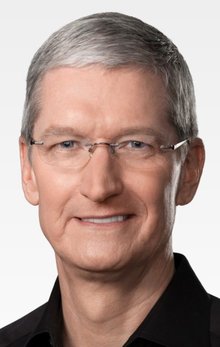
CEO: Tim Cook
HQ: Cupertino, US
Founded: 1976
Units sold (Q2 2025): ~45-46m (global)
Apple designs its iPhones in California and partners with manufacturers like Foxconn to assemble them on a massive scale.
Under CEO Tim Cook, Apple’s production is known for tight quality control and exacting component standards. Assembly facilities use advanced robotics and human precision to integrate proprietary chips, camera modules and high-resolution displays.
iPhone manufacturing includes rigorous environmental and durability testing, while supply chain synchronisation ensures consistent availability worldwide.
Apple’s vertical integration extends to software calibration during production, helping create a seamless user experience. Unsurprisingly, factory partners operate under strict performance and compliance metrics.
1. Samsung
CEO: Jun Young Hyun
HQ: Suwon, South Korea
Founded: 1969
Units sold (Q2 2025): 57.5–58m (global)
Samsung, the world’s largest smartphone maker by shipments, manufactures devices in South Korea, Vietnam, India and Brazil.
It designs and manufactures nearly all components in-house, including chips, displays and batteries.
The company operates one of the most integrated supply chains in the industry, supporting the production of both high-end foldables and mass-market Galaxy models.
Samsung’s factories use AI-assisted assembly lines and rapid prototyping to bring new designs to market. This level of scale and control secure its position as a global leader.




Executives
Sundar Pichai
CEO
Tim Cook
Executive Chairman