
GB Energy: How Rolls-Royce is Making Small Modular Reactors
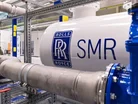
After years of development, Great British Energy – Nuclear (GBE-N) has awarded Rolls-Royce SMR a contract to deliver the UK's first small modular reactors.
The contract follows Rolls-Royce SMR's selection as preferred technology partner in June 2025 and triggers site-specific design work, regulatory engagement and planning processes ahead of a future Final Investment Decision.
With US$3.3bn in public funding allocated to the programme, the deal could reshape domestic manufacturing capacity for decades.
Factory-built nuclear infrastructure
The manufacturing rationale behind small modular reactors differs fundamentally from traditional large-scale nuclear plants. Components are factory-built rather than constructed entirely on site, which could offer industrial facilities new opportunities in precision engineering and modular assembly.
This production approach aims to reduce cost overruns and construction delays that have historically plagued nuclear projects, but is is yet to be proven at scale. GBE-N has already awarded more than US$445m in supply chain contracts, suggesting manufacturing partners are being secured more rapidly than initial timelines indicated.
Simon Roddy, CEO of GBE-N, says: "Working with Rolls-Royce SMR, we're bringing a significant long-term investment to the UK industrial supply chain.
"Supporting skills, innovation and growing our industrial capability is essential to this partnership."
Production scope and workforce implications
The agreement commits Rolls-Royce SMR to delivering three reactor units that will generate at least 1.4 GW of electricity, enough to power around three million homes for more than 60 years according to the company's projections.
Beyond energy output, the project is expected to support 3,000 construction jobs, with additional positions distributed across the domestic manufacturing and supply chain network.
The programme's funding structure draws from multiple sources. GBE-N is utilising the US$3.3bn allocated during the 2024 Spending Review, while the National Wealth Fund is separately committing up to US$760m directly to Rolls-Royce SMR to support technology development and manufacturing scale-up.
Chris Cholerton, CEO of Rolls-Royce SMR, says: "This contract unlocks the delivery of our first three units and brings certainty to the UK SMR programme
"We are transforming the way nuclear projects are delivered, to give greater cost and schedule certainty with a standardised, factory-built approach."
Export potential for British manufacturers
Energy Secretary Ed Miliband has linked the announcement to current global energy market instability, stating that "at a time of global instability, this is a major milestone for Britain's energy security". He noted the project would create "a generation of good jobs" and deliver "clean, homegrown power for decades to come".
However, the manufacturing implications extend beyond domestic borders. Chris noted that Rolls-Royce SMR already has plans for up to six further units in Czechia, making it "the only company with multiple commitments in Europe".
This European dimension matters for UK manufacturing economics, as a larger order book could make the factory-built model more viable and help distribute development costs across multiple projects rather than concentrating risk on a single deployment.

Whether that pipeline materialises will depend on factors beyond British manufacturing control, but the UK contract provides a commercial foundation that could give domestic suppliers credibility with future customers.