Nvidia and Samsung's Boost for Semiconductor Manufacturing

Nvidia and Samsung are bidding to advance AI-driven semiconductor manufacturing and deliver a notable increase in operational efficiency.
Their partnership involves the development of a new semiconductor AI factory powered by more than 50,000 Nvidia GPUs.
Nvidia and Samsung state that this facility is a central component of Samsung’s wider digital transformation strategy.
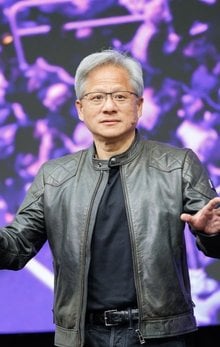
Jensen Huang, Founder and CEO of Nvidia, says: “We are at the dawn of the AI industrial revolution – a new era that will redefine how the world designs, builds and manufactures."
“As Korea’s and one of the world’s foremost technology and industrial leaders, Samsung is forging its AI foundation with Nvidia to lead the future of intelligent and autonomous manufacturing – transforming Samsung itself and the many industries around the world built on Samsung technologies.”
AI-powered manufacturing
To achieve significant speed improvements in circuit simulation, verification and manufacturing analysis, Samsung is utilising Nvidia GPUs, Nvidia CUDA-X libraries and solutions from partners including Synopsys, Cadence and Siemens.
A core feature of the new facility will be a real-time digital twin. This virtual model of the factory is designed to enable operational planning, anomaly detection and logistics optimisation, which could in turn help to reduce the plant's environmental impact.
Jay Y. Lee, Executive Chairman of Samsung Electronics, says: “Nvidia has been a visionary of this new AI era and its technologies have empowered innovators to reinvent industries.”
"From Samsung’s DRAM for Nvidia's game-changing graphics card in 1995 to our new AI factory, we are thrilled to continue our longstanding journey with Nvidia in leading this transformation as we envision creating new standards for the future and accelerating breakthroughs for the world.”
According to Samsung and Nvidia, their collaboration results in 20 times greater performance and offers a scalable deployment model across the semiconductor manufacturing sector.
AI capabilities and energy consumption
As the capabilities of AI develop, its adoption across various industries is expanding. This rapid growth has raised important questions regarding the environmental impact of the technology, particularly its energy consumption.
Jensen explains: "Data centres are already about 1-2% of global electricity consumption and that consumption is expected to continue to grow. This continued growth is not sustainable, neither for operating budgets nor for our planet."
To address this, Nvidia’s AI platform, the GB300 NVL72, features a set of onboard energy storage and power management tools. These are designed to lessen the strain that AI workloads can place on electricity grids.
The system uses both hardware and software to limit energy spikes, offering a method to improve grid stability during power-intensive training sessions.
Using AI for improved sustainability
Nvidia also suggests that AI can be a tool to make data centres themselves more sustainable.
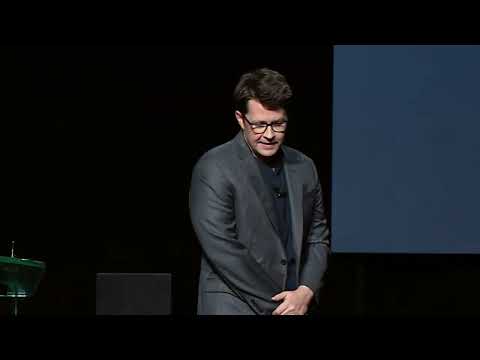
Josh Parker, Senior Director of Corporate Sustainability at Nvidia, says: "AI, I firmly believe, is going to be the best tool that we've ever seen to help us achieve more sustainability and more sustainable outcomes.
"If you compare the energy efficiency for AI inference from eight years ago until today, it's 45,000 times more energy efficient."
Nvidia's approach is centred on accelerated computing, a concept that combines GPUs and CPUs to manage complex computations with greater speed and efficiency.
The company states these combined systems are up to 20 times more energy efficient than traditional CPU-only systems when used for AI inference and training. This focus on efficiency is a core principle for Nvidia.
Josh will be part of the AI in Sustainability panel at Sustainability LIVE: The Net Zero Summit in March 2026, discussing how AI is transforming how organisations manage environmental performance.
Secure your tickets to attend now and save more than £200 with our Early Bird offer.


Executives
Jensen Huang
Founder and CEO
Josh Parker
Head of Sustainability