TSMC, ASML & Lockheed: Top Manufacturing News This Week

27 April
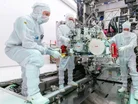
TSMC has decided not to buy ASML's new lithography machines for use in its semiconductor manufacturing process.
TSMC’s Co-Chief Operating Officer Kevin Zhang said its new A13 node does not require the High-NA EUV machines, according to Bloomberg.
The technology is used to print the most intricate layers on semiconductor wafers for chips that enable AI and augmented reality.
Shares in ASML dropped dramatically after the announcement.
27 April
The US and Israel's attack on Iran has seen shipping traffic in the Strait of Hormuz grind to a near halt and regional energy infrastructure come under target.
The crisis is not limited to energy. It has affected helium needed for semiconductor manufacturing, aluminium needed for automotive manufacturing and a large variety of industries globally who have faced higher raw materials costs.
Printed circuit boards (PCBs) are facing cost rises due to disrupted supplies of critical minerals and even resins.
PCBs are used in the manufacturing of almost all electronic devices, including smartphones and computers.
28 April
Middle East volatility has disrupted supply chains around the world.
According to Wood Mackenzie, the conflict could remove 3.5 million tonnes of aluminium output in 2026. This would leave automotive, aerospace and packaging manufacturers facing lasting instability from raw material shortages and shipping delays.
The aluminium industry's reliance on Middle Eastern production has become more apparent as geopolitical tensions escalate.
Regional facilities account for a substantial portion of global capacity, making any disruption particularly consequential for international markets.
27 April
Lockheed Martin plans to expand its production following US Government contract agreements.
Chief Executive Officer Jim Taiclet called it a "golden opportunity" during a first-quarter 2026 earnings call on 23rd April.
Lockheed Martin is working to transition government contracting to a commercial style system, with the aerospace and defence manufacturer looking to scale operations after securing additional government funding amid the US and Israel's war on Iran.
29 April
Professional services giant Accenture has invested in General Robotics, an AI research and deployment company, to advance autonomous operations with physical AI.
Both companies use the NVIDIA Omniverse in operations for physical AI deployment.
General Robotics says it offers general-purpose robotic intelligence which allows organisations to rapidly deploy and continuously adapt robots of “any form, with any AI, for any task”.
This comes at a time when many companies are scaling physical AI operations in manufacturing, including the deployment of humanoid robots.
Company portals







Executives
Jim Taiclet
Chairman, President & CEO