
Additive manufacturing, more widely known as 3D printing, is reshaping the manufacturing landscape. The technology, which builds parts layer by layer from digital designs, enables levels of precision, complexity and customisation that conventional subtractive methods have never matched.
Once limited to rapid prototyping, additive processes are now firmly established in production, from lightweight aerospace brackets and engine components to customised medical implants and automotive tooling.
Manufacturers are using the technology to shorten design cycles, reduce material waste and create resilient, localised supply chains – it is particularly valuable where high-performance materials, low-volume production or complex geometries are required.
Beyond the factory floor, additive manufacturing also plays a crucial role in driving sustainability, supply-chain resilience and product innovation. It enables engineers to consolidate assemblies into single components, reduce energy and material use, and rapidly adapt designs in response to shifting demand.
From aerospace primes to automotive giants and pioneering technology providers, the following companies are leading the adoption and evolution of additive manufacturing, setting the direction for the future of global industry.
10. General Electric (GE)
CEO: H. Lawrence Culp Jr
Headquarters: Evendale, Ohio, US
Industry: Aerospace & Industrial Engines
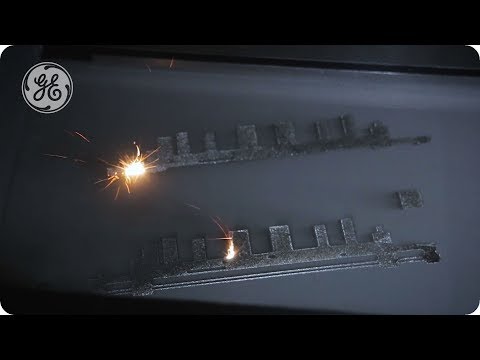
General Electric (operating as GE Aerospace) is both a leading user and supplier of additive manufacturing through its Colibrium Additive division (formerly GE Additive). It develops industrial-scale metal printers, powders and services. GE uses additive manufacturing extensively in its jet engines, most notably the GE9X, which includes seven 3D-printed parts.
Through the additive process, the company has consolidated around 300 traditionally manufactured parts into just a handful of components, improving efficiency and reducing weight. This combination of hardware, materials and services positions GE as a global leader in additive manufacturing for aerospace.
9. Siemens

CEO: Roland Busch
Headquarters: Berlin and Munich, Germany
Industry: Industrial Automation & Digital Manufacturing
Siemens champions additive manufacturing through its industrial software platforms and applications. Its NX and Additive Manufacturing Network solutions enable design-for-additive manufacturing, digital twin validation and supply chain collaboration.
Siemens Energy’s Materials Solutions unit produces certified metal parts, including turbine components and 3D-printed burners with thousands of operating hours in service. By combining digital design with industrial production, Siemens offers a clear route from prototyping to series manufacturing, making it both an enabler and practitioner of advanced additive manufacturing.
8. Honeywell

CEO: Vimal Kapur
Headquarters: Charlotte, North Carolina, US
Industry: Aerospace & Engineering
Honeywell applies additive manufacturing across aerospace and defence programmes. The company has qualified and FAA-certified flight-critical engine parts manufactured through additive manufacturing, marking an industry milestone in safety and reliability.
It produces complex geometries that improve durability, cut weight and reduce costs, while also embedding additive manufacturing into its tooling and maintenance strategies. Honeywell’s focus on aerospace demonstrates how additive manufacturing can accelerate innovation cycles and ensure supply resilience in mission-critical operations.
7. Stratasys

CEO: Yoav Zeif
Headquarters: Minnetonka, Minnesota, US & Rehovot, Israel
Industry: Additive Manufacturing Technology
Stratasys is a pioneer of additive manufacturing and one of the world’s largest suppliers of industrial 3D printers. Known for its FDM and PolyJet technologies, Stratasys serves industries including aerospace, automotive, consumer products and healthcare.
Its systems are recognised for precision, reliability and versatility, supporting applications from prototyping to production tooling and end-use parts. From dual headquarters in the US and Israel, the company continues to innovate in materials and hardware, helping manufacturers worldwide embed additive solutions into everyday production.
6. 3D Systems

CEO: Dr Jeffrey A. Graves
Headquarters: Rock Hill, South Carolina, US
Industry: Additive Manufacturing Technology
3D Systems is one of the original pioneers of 3D printing, founded by Chuck Hull, the inventor of stereolithography. Today it delivers a broad portfolio of polymer and metal printing systems, materials and software. The company’s technology is used across the aerospace, automotive, healthcare and industrial sectors.
Applications range from medical implants and surgical planning models to lightweight aerospace structures and industrial tooling. With a focus on end-to-end solutions, 3D Systems plays a critical role in advancing additive manufacturing from prototyping to production.
5. BMW Group

CEO: Oliver Zipse
Headquarters: Munich, Germany
Industry: Automotive
BMW Group has integrated additive manufacturing across product development, series production and spare-parts strategies. Its Additive Manufacturing Campus in Munich acts as a central hub for innovation, producing hundreds of thousands of components annually.
At BMW, additive manufacturing is used for lightweight structural parts, rapid prototyping and customised design elements, while also reducing tooling times and costs. By embedding the innovative process in mainstream vehicle development, BMW enhances efficiency, flexibility and sustainability.
4. Ford Motor Company

CEO: Jim Farley
Headquarters: Dearborn, Michigan, US
Industry: Automotive
Ford Motor Company has long been an early adopter of 3D printing, using it for prototyping, tooling and production. Today, it collaborates with tech firm Carbon for high-speed polymer printing and with HP to upcycle 3D printing waste into injection-moulded vehicle parts.
Ford’s approach demonstrates how additive manufacturing can accelerate design cycles, reduce manufacturing costs and contribute to sustainability goals. By embedding it across engineering, design and production, Ford strengthens its reputation as a forward-looking manufacturer embracing digital transformation.
3. Dassault Systèmes

CEO: Pascal Daloz
Headquarters: Vélizy-Villacoublay, France
Industry: Software & PLM
Dassault Systèmes enables additive manufacturing through its software ecosystem rather than producing printers. Its 3DEXPERIENCE platform integrates its CATIA, SIMULIA and DELMIA software solutions, offering powerful tools for additive manufacturing design, simulation and lifecycle management.
By supporting complex geometry creation, generative design and process optimisation, Dassault empowers manufacturers to adopt additive manufacturing at industrial scale. Its platforms are used across aerospace, automotive, life sciences and consumer goods, positioning Dassault as a vital enabler of additive manufacturing innovation worldwide.
2. Airbus
CEO: Guillaume Faury
Headquarters: Leiden, Netherlands (Corporate); Toulouse, France (Main Operations)
Industry: Aerospace
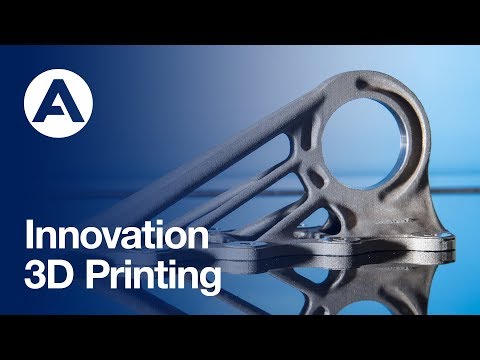
Airbus is one of the most prominent users of additive manufacturing in aerospace. It employs additive manufacturing processes to produce lightweight brackets, cabin fittings, titanium structural parts and complex engine components.
By integrating additive manufacturing across both production and MRO (maintenance, repair and overhaul), Airbus reduces part counts, streamlines supply chains and delivers significant weight savings, improving fuel efficiency and sustainability. With large-scale adoption in aircraft interiors and structures, Airbus demonstrates how additive manufacturing can transform aerospace manufacturing and set new standards in efficiency.
1. Lockheed Martin

CEO: James Taiclet
Headquarters: Bethesda, Maryland, US
Industry: Aerospace & Defence
Lockheed Martin deploys additive manufacturing across its aerospace, defence and space operations. It produces satellite structures, rocket engine parts and military systems that require lightweight, high-performance designs. Additive manufacturing enables the company to consolidate assemblies into fewer components, accelerate development cycles and strengthen supply-chain resilience.
With projects spanning deep-space exploration to defence modernisation, Lockheed Martin is a leader in demonstrating the transformative role additive manufacturing plays in mission-critical applications. Its leadership in integrating additive manufacturing reflects both technological capability and strategic foresight in advanced manufacturing innovation.