Top 10: Automotive Manufacturers
More than 96 million motor vehicles were manufactured in 2025, according to the International Organization of Motor Vehicle Manufacturers.
Often, the industry is a driver of global manufacturing productivity and its innovations spill over to other sectors, such as advanced robotics and computerised design.
According to the IEA, more than 10 million people are directly employed by these manufacturers. This creates a multiplier effect, supporting indirect jobs in sectors like semiconductors, raw materials and logistics.
Manufacturing Digital has ranked the Top 10 automotive manufacturers by market share.
10. Nissan Motor Co.
CEO: Ivan Espinosa
Headquarters: Yokohama, Japan
Founded: 1933
Nissan is phasing out rigid, single-platform assembly lines in favour of highly automated, mixed-production environments, a strategy it calls the Nissan Intelligent Factory (NIF).
Debuting at its flagship Tochigi plant in Japan, this initiative is designed to handle the complexity of building electric, hybrid and internal combustion engine vehicles on the same line.
For example, Simultaneous Underfloor Mounting Operation uses a robotic pallet system to install the motor, battery and rear suspension all at once. This system supports 27 different module combinations.
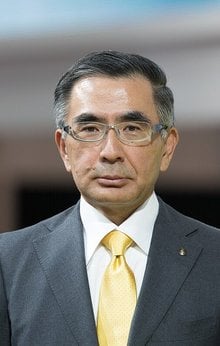
9. Suzuki Motor Corporation
President: Toshihiro Suzuki
Headquarters: Shuzuoka, Japan
Founded: 1909

Suzuki operates highly automated production systems, particularly in the most physically demanding and precision-dependent stages of manufacturing.
The company has extensively automated its welding and paint shops. In body assembly, high-speed robotic arms handle spot-welding and materials handling.
Suzuki is mandating DX training for all employees by 2030, aiming to turn workers into developers who can solve on-site manufacturing issues using AI.
Its Kosai plant has produced more than 20 million vehicles since beginning production and handles high-volume vehicles like the Alto, Spacia and Hustler.
8. Honda Motor Co.
President & CEO: Toshihiro Mibe
Headquarters: Tokyo, Japan
Founded: 1948
Honda is automating processes across its plants, such as using specialised robotic stations for piston installation in a US factory.
It uses smart sensors to continuously monitor machine health. AI analyses this data to predict equipment failures before they happen, reducing unplanned downtime.
Rather than relying entirely on human inspectors, Honda deploys computer vision and machine learning algorithms to detect defects in paint and welding.
Through a digital efficiency program leveraging generative AI for administrative and operational management, Honda reduced operational labour overhead by 2.42 million hours.
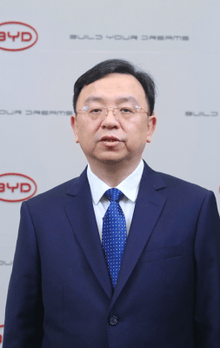
7. BYD
CEO: Wang Chuanfu
Headquarters: Shenzhen, China
Founded: 1995

BYD manufactures roughly 75% of its vehicle components in-house, from semiconductor chips and electric motors to batteries.
The company produced its seven millionth vehicle in March 2024, its eight millionth in July, its nine millionth in September and its 10 millionth before the end of that same year.
BYD’s megafactories, such as the Xi'an facility, feature production lines that can operate at up to 97% autonomy.
It uses cell-to-body manufacturing, where battery cells are built directly into the structural body of a car. This not only improves the vehicle, but also reduces the number of parts needed.
6. Ford Motor Company
CEO: Jim Farley
Headquarters: Michigan, US
Founded: 1903
Ford is modernising its existing plants by implementing automation where it yields the highest return on investment and improves worker ergonomics, rather than fully automating for automation's sake.
At its Cologne plant in Germany, cobots were installed in 2019 to sand the body surface of Ford Fiestas. The six UR10 cobots, created by Universal Robots, can sand the entire body in just 35 seconds.
In partnership with Ekso Bionics, Ford rolled out upper body exoskeletal technology in 2018. The EksoVest can help to reduce injury risk when carrying out repetitive overhead tasks.
5. Stellantis
CEO: Antonio Filosa
Headquarters: Hoofddorp, Netherlands
Founded: 2021

Stellantis manages a complex global production network with 14 distinct brands.
Instead of dedicating factories to a single brand, it maximises operational throughput by building multiple brands on shared architectures.
At the Detroit Assembly Complex, AI-driven KEYENCE smart-camera systems execute more than 50,000 automated inspections each day, verifying accuracy and providing real-time quality analytics.
In partnership with NVIDIA, Stellantis aims to deploy AI-enabled digital twins across its plant using Omniverse to simulate, validate and optimise production changes.
4. General Motors
CEO: Mary Barra
Headquarters: Michigan, US
Founded: 1908
General Motors has a long history of developing manufacturing techniques, from the first programmable logic controllers in 1969 to new highly automated, AI-driven assembly lines.
Its C-Flex programmable body shop tooling allows multiple different body panels to be robotically welded using the same set of programmable tools.
It builds a range of AI solutions in-house to allow its teams to adapt and minimise downtime without relying on third-party vendors.
At its Factory ZERO, the company is piloting WeldBrAIn, a proprietary technology that monitors quality on the production line. This technology has expanded quality check capabilities from manually inspecting four parts per shift to checking every weld in real time.
3. Hyundai Motor Company
CEO: José Muñoz
Headquarters: Seoul, South Korea
Founded: 1967

Hyundai's Ulsan Plant in South Korea is the world’s largest single automotive plant, covering roughly five million square metres with five independent production zones.
It has an annual output capacity of around 1.5 million vehicles, about 30% of the company’s total global production.
At the Hyundai Motor Group Innovation Center Singapore (HMGICS), the company replaced conveyor belt systems with cell-based production. Cars are built in individual cells where human workers collaborate directly with robots.
Hyundai operates production facilities in the United States, India, the Czech Republic, Turkey, Brazil and Indonesia.
2. Volkswagen Group
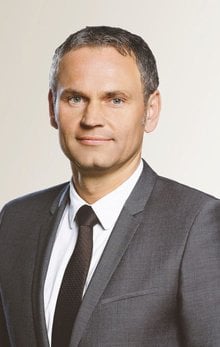
CEO: Oliver Blume
Headquarters: Wolfsburg, Germany
Founded: 1937
Volkswagen Group operates a complex and expansive manufacturing network across 111 production sites.
Its factory productivity climbed by 4.6% in 2025 compared to the previous year. This was driven by a reduction in factory overheads, standardised product costs and efforts to decrease complexity.
First rolling out at Audi facilities, Edge Cloud 4 Production replaces traditional local hardware controllers with virtual programmable logic controllers. Industrial devices are all synchronised from a central cloud, reducing hardware maintenance and increasing IT security.
ProcessGuardAIn is an AI solution that ingests machine and sensor data to monitor manufacturing processes in real-time and detect anomalies.
AI Weld Splatter Detection is moving into series production across six plants, detecting weld splatted on a car’s underbody and marking it with light so a robotic arm can grind it down.
1. Toyota Motor Corporation
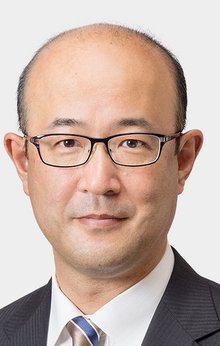
CEO: Kenta Kon
Headquarters: Toyota City, Japan
Founded: 1937

Toyota’s manufacturing operations are some of the most studied in the world, famous for establishing the principles of lean manufacturing.
Everything it does on the factory floor is rooted in the Toyota Production System (TPS), which aims to eliminate “muda”, or waste, while maintaining maximum flexibility. It follows the pillars of just-in-time, relying on pull signals rather than forecasting, and “jidoka”, or automation with a human touch.
Toyota is using digital 3D models to simulate the installation and operation of new factory equipment before anything is physically built. Front-line workers use VR and head-mounted displays to test ergonomics and identify defects in the process early.
For its upcoming bipolar lithium iron phosphate (LiFePO) batteries and solid-state batteries, Toyota has developed synchronous control technology that allows materials to be stacked at high speeds with high precision.
Using digital simulations for equipment installation has reduced physical rework to one tenth, halved production preparation lead times and lowered new equipment costs by 25%.
Company portals














Executives
Antonio Filosa
Chief Executive Officer

Ivan Espinosa
CEO
Jim Farley
Chief Executive Officer

José Muñoz
CEO
Kenta Kon
Chief Financial Officer and Operating Officer at Woven by Toyota

Mary Barra
CEO
Oliver Blume
CEO

Toshihiro Mibe
CEO
Toshihiro Suzuki
CEO
Wang Chuanfu
CEO