Top 10: Smartphone Manufacturers
Despite component shortages and supply chain turbulence, the value of the smartphone market has never been higher.
Deloitte projects the global smartphone market will reach a record valuation of US$578.9bn in 2026, driven by an expanding consumer appetite for premium, AI-capable devices.
However, the IDC forecasts a 13% decline in global shipments due to memory chip shortages and rising costs.
To navigate these pressures, hardware brands are diversifying their geographic footprints, shifting final-stage production out of China and into emerging manufacturing hubs like India.
Manufacturing Digital has ranked 10 of the top smartphone manufacturers.
10. Google
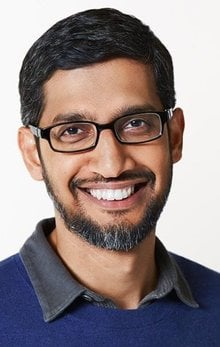
CEO: Sundar Pichai
Headquarters: California, US
Founded: 1998
Google’s Pixel flagship smartphones go through the new product introduction phase and are primarily assembled in Vietnam. However, facing tariff pressures, it has moved some of its production and US-bound exports to India.
It relies on CMs and ODMs, like Foxconn and Compal, while strictly controlling component sourcing and design.
For the first four generations of its Tensor chipset, Google relied on Samsung Foundry. Starting with the Pixel 10 and carrying into the development of the Pixel 11, it has entirely transitioned its chip manufacturing to TSMC.
9. Huawei
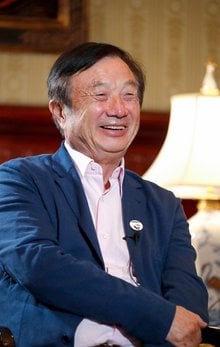
CEO: Ren Zhengfei
Headquarters: Shenzhen, China
Founded: 1987

Instead of outsourcing everything to EMS providers, Huawei sends its own experts to work side-by-side with partners to develop customised components like camera modules and batteries.
Its core R&D, prototyping and highest-level manufacturing operations are centralised in China’s Guangdong province. Huawei’s US$1.5bn Dongguan campus houses more than 25,000 employees.
The company now oversees a localised network of roughly 2,000 affiliated companies across the entire semiconductor and smartphone component supply chain.
8. Motorola Mobility
SVP Lenovo Mobile Business: Sergio Buniac
Headquarters: Chicago, Illinois
Founded: 2011
A subsidiary of Lenovo, Motorola’s smartphones are made using an efficient hybrid manufacturing model. It uses both in-house production capabilities and localised partnerships with ODMs and EMS.
Much of its global volume is centralised in China, where Lenovo operates a purpose-built mobile manufacturing facility in Wuhan.
In markets outside of China, Motorola relies on semi-knocked-down and completely-knocked-down manufacturing.
It produces millions of devices in India and executes local assembly in Brazil.
7. HONOR
CEO: James Li
Headquarters: Shenzhen, China
Founded: 2013
HONOR’s Shenzhen Intelligent Manufacturing Industrial Park is dedicated entirely to the assembly of its flagship devices like the Magic V series foldable phones.
It has launched localised production initiatives in Indonesia and Bangladesh to hedge against supply chain volatility and manage local regulatory requirements.
Just 15% of the assembly process at its Industrial Park requires human intervention and it reports a 99.97% first-pass yield rate.
HONOR also uses simulation solvers it created, powered by a mix of CPUs and GPUs. This approach can reduce power consumption and increase computing efficiency, allowing for fast prototyping.
6. Vivo
CEO: Shen Wei
Headquarters: Dongguan, China
Founded: 2009
Vivo’s headquarters in Dongguan, Guangdong is its primary production and R&D hub. Alongside facilities in Shenzhen and Chongqing, these factories handle most of its high-end, technologically complex manufacturing.
It also has production and assembly lines in strategic, fast-growing markets like India, Bangladesh and Pakistan.
Around the world it has 10 R&D centres, many of which work directly alongside manufacturing facilities.
Vivo uses surface mount technology (SMT) to assemble motherboards with microscopic precision and automated optical inspection (AOI) systems and robotic testing arms handle for quality assurance.
5. Transsion Holdings
Chairman and General Manager: Zhu Zhaojiang
Headquarters: Shenzhen, China
Founded: 2006
Through its TECNO, Infinix and itel brands, Transsion dominates the Global South smartphone market.
It operates a decentralised and highly localised manufacturing model to bypass import tariffs and respond rapidly to regional market demands.
Much of its R&D, product design and advanced component manufacturing takes place in China. Its first overseas manufacturing plant in Ethiopia was established in 2011.
To capture the APAC market, it operates local assembly plants using semi-knocked-down and completely-knocked-down processes.
4. OPPO
CEO: Tony Chen
Headquarters: Shenzhen, China
Founded: 2004

While OPPO’s research, development and flagship prototyping take place in China, the company has decentralised its mass production.
In late 2025 it opened a new US$50m facility in Egypt with 17 production lines and a planned expansion to 20, capable of producing around 500,000 units per month.
Unlike brands that rely entirely on ODM partners, OPPO makes a majority of its core lineup in-house.
It operates advanced surface mount technology lines to print its own motherboards, allowing for tighter control over yield rates and defect management.
In 2026, OPPO announced that Realme would be integrated into the company as a sub-brand, growing its overall market share.
3. Xiaomi
CEO: Lei Jun
Headquarters: Beijing, China
Founded: 2010
Xiaomi has heavily invested in proprietary automation to reduce labour dependence, increase throughput and eliminate human error. Much of its modern manufacturing relies on lights-out or dark factory principles.
It uses robots and ultra-high-resolution cameras powered by deep learning to inspect components and adjust manufacturing parameters.
Xiaomi’s Changping factory, which produces flagship devices, has achieved a zero waste to landfill certification as part of its efforts to integrate more recycled materials into its assembly lines and reduce electronic waste.
The company is using its Changping facility as a blueprint to scale proprietary automation across its other manufacturing sectors, including its electric vehicle plants.
2. Samsung
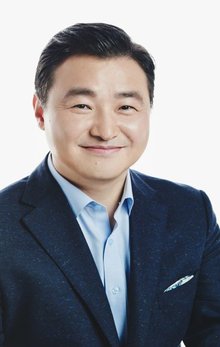
DX CEO: Tae Moon Roh
Headquarters: Suwon, South Korea
Founded: 1938
Vietnam is the heart of Samsung's smartphone assembly. The company operates facilities primarily in the northern regions, like Bac Ninh and Thai Nguyen.
The region offers strategic proximity to Chinese component ecosystems while providing a safer haven for tariff-free global exports.
Samsung also operates the world's largest mobile phone manufacturing factory in Noida, India, allowing the company to bypass import tariffs in the second largest smartphone market.
The company builds many of its own components. Samsung Display, Samsung Electro-Mechanics and Samsung Foundry supply screens, camera modules and processors directly to the mobile division.
At the Mobile World Congress in March 2026, Samsung announced its strategy to transition all global manufacturing operations into AI-Driven Factories by 2030.
1. Apple
Incoming CEO: John Ternus
Headquarters: California, US
Founded: 1976

Apple designs its products, develops its own software and strictly controls its supply chain, but outsources physical assembly to a network of contract manufacturers.
Foxconn, Pegatron and Tata Group are some of the electronics manufacturing service providers it has worked with to date.
The company runs a lean supply chain, ordering parts exactly when needed and maintaining low inventory levels to minimise warehousing costs and avoid the financial risk of unsold components depreciating.
To insulate itself from escalating US-China trade disputes, Apple is on track to shift the assembly of all US-bound iPhones to India by the end of 2026.
It is also investing significantly in the US for production of some high-value components and lower-volume assemblies. Its high labour-intensive products, like the iPhone, will continue to be assembled overseas.
Apple updated its Supplier Code of Conduct in 2025 to enforce even stricter environmental, labour and human rights standards. The company deploys experts on-site within 24 to 48 hours to investigate potential violations.
Company portals





Executives

John Ternus
CEO
Ren Zhengfei
Founder and CEO
Sundar Pichai
CEO
Tae-Moon Roh
Head of Device eXperience (DX) Division