Top 10: Industrial Robot Manufacturers
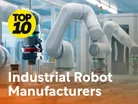
Industrial robots are the backbone of modern manufacturing operations, driving efficiency, precision and innovation across industries from automotive to electronics.
As factories evolve into smart, digitally-connected ecosystems, the demand for advanced robotics continues to surge, with manufacturers competing to deliver faster, safer and more versatile solutions.
This week, Manufacturing Digital spotlights the leading industrial robot manufacturers shaping the future of automation, ranking them by their global market share.
10. Doosan Robotics
Founded: 2015
CEO: Kim Min-pyo
Market Share: 1%
Established in 2015, Doosan Robotics, a subsidiary of Doosan Group, specialises in collaborative robots (cobots) designed to work safely alongside humans. Doosan is recognised for its advanced technology and intuitive programming interface.
Kim Min-pyo was appointed CEO in February 2025. Under his leadership, the company has focused on expanding its global footprint, particularly in North America and Europe.
Doosan is a rising player in the cobot sector, competing with established leaders. Its emphasis on user-friendly design and versatile applications positions it as a strong contender in the rapidly growing collaborative robotics market.
9. Comau
Founded: 1973
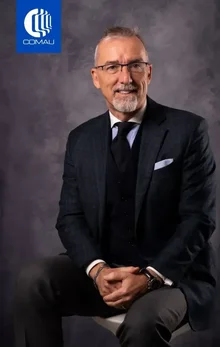
CEO: Pietro Gorlier
Market Share: 1%
Comau, founded in 1973, is a global leader in industrial automation and robotics with a strong presence in automotive manufacturing – particularly for welding and painting applications.
Comau provides advanced automation solutions, including robotic arms, assembly systems and digital manufacturing technologies to its customers and is majority-owned by One Equity Partners, collaborating closely with Stellantis (former parent company).
Pietro Gorlier was appointed CEO in 2022, bringing decades of experience in automotive and industrial leadership. Comau is influential in deep integration with automotive OEMs and specialises in large-scale automation projects.
The company is also expanding into new industries such as renewable energy and logistics, aiming to diversify beyond its automotive roots.
8. Universal Robots
Founded: 2005
CEO: Jean-Pierre Hathout
Market Share: 4%
Widely considered a pioneer in the cobot industry, Universal Robots was founded by Esben Østergaard, Kasper Støy and Kristian Kassow to make robotics accessible to all businesses.
Universal Robots’ breakthrough came with its launch of user-friendly cobots that could safely operate alongside humans without safety cages.
Acquired by Teradyne in 2015, Universal Robots has become a global leader in cobots. In May 2025, Jean-Pierre Hathout became CEO, furthering the company’s reach into diverse industries, including electronics, packaging and healthcare.
Universal Robots is recognised for democratising automation, enabling small and medium-sized enterprises to adopt robotics affordably.
7. Denso
Founded: 1949
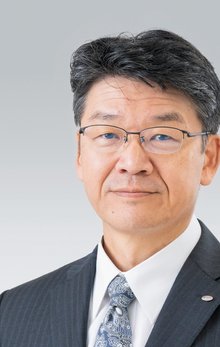
CEO: Shinnosuke Hayashi
Market Share: 4%

Denso is one of the world’s largest automotive component manufacturers and a major player in industrial robotics. Originally known as Nippon Denso, the company became independent from Toyota and has since grown into a global powerhouse.
Denso’s robotics division specialises in compact, high-speed industrial robots used in assembly, inspection and packaging. Its robots are particularly popular in electronics and automotive manufacturing, where precision and reliability are critical.
CEO Shinnosuke Hayashi, appointed in 2024, has emphasised innovation in software and mobility electronics, aligning robotics with Denso’s broader vision of smart manufacturing.
The company continues to invest heavily in R&D, aiming to integrate AI and IoT technologies into its robotics solutions for next-generation smart factories.
6. KUKA
Founded: 1898
CEO: Christoph Schell
Market Share: 6%
KUKA originally manufactured acetylene gas lamps before transitioning into welding equipment and eventually robotics.
The business is renowned for its orange robotic arms, widely used in automotive manufacturing, aerospace and logistics.
In 2016, the Chinese appliance giant Midea Group acquired KUKA, strengthening its global presence.
Christoph Schell was appointed CEO in April 2025, bringing extensive experience from Intel and HP, focusing on digital manufacturing and AI-driven automation.
5. Yaskawa
Founded: 1915
CEO: Masahiro Ogawa
Market Share: 8%

Yaskawa Electric Corporation, founded in 1915, is a pioneer in motion control and robotics. The company introduced Japan’s first industrial robot in 1977 and has since become a global leader in automation.
Yaskawa’s product portfolio includes servo motors, AC drives, controllers and industrial robots, widely used in welding, assembly and packaging. Yaskawa’s CEO Masahiro Ogawa leads the company with a focus on innovation and sustainability.
The company’s Motoman robot series is particularly well-regarded for reliability and versatility in the manufacturing industry and it invests heavily in AI and digital twin technologies to enhance smart manufacturing.
4. Kawasaki Robotics
Founded: 1969
CEO: Yasuhiko Hashimoto (Kawasaki Heavy Industries)
Market Share: 8%
Kawasaki Robotics, part of Kawasaki Heavy Industries, introduced Japan’s first industrial robot in 1969 through a partnership with Unimation.
Since then, it has grown into a global robotics leader, offering solutions for automotive, electronics and healthcare industries.
Kawasaki is a major competitor in industrial robotics, leveraging its expertise in heavy machinery and engineering. The company specialises in collaborative robotics and automation solutions that integrate seamlessly into modern production environments.
3. FANUC
Founded: 1958 (independent from Fujitsu since 1972)
CEO: Kenji Yamaguchi
Market Share: 11%
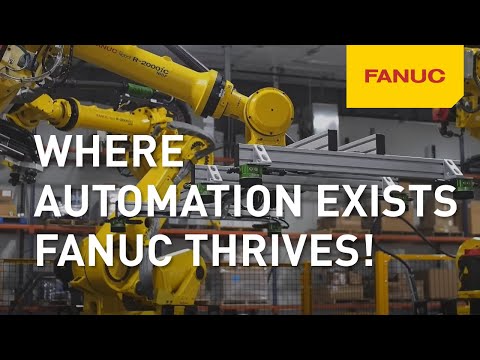
FANUC Corporation is one of the world’s largest manufacturers of industrial robots.
Founded in 1958 as part of Fujitsu before becoming independent in 1972, FANUC has built a reputation for reliability and scale. Its bright yellow robots are iconic in factories worldwide, particularly in automotive and electronics manufacturing.
FANUC specialises in CNC systems, factory automation and robotics, offering integrated solutions for smart manufacturing. CEO Kenji Yamaguchi, appointed in 2019, has overseen FANUC’s continued dominance in robotics and automation.
The company’s emphasis on simplicity, reliability and scalability has made it the preferred choice for manufacturers. FANUC continues to invest in AI and IoT integration to enhance its robotics offerings.
2. Epson
Founded: 1981
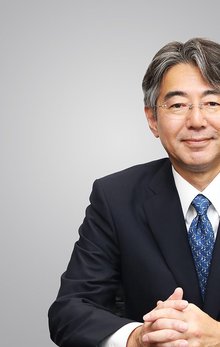
CEO: Junkichi Yoshida
Market Share: 13%
Epson, while best known for its printers and imaging products, also has a strong presence in robotics. Its investments in robotics began in the 1980s when engineers at Seiko Epson developed SCARA robots to assemble watch components.
Today, Epson Robotics is a global leader in compact, high-precision robots used in electronics, medical devices and consumer goods manufacturing.
Epson’s focus on precision engineering and reliability has earned it a strong reputation among manufacturers seeking efficient automation solutions.
1. ABB
Founded: 1988
CEO: Morten Wierod
Market Share: 13%

ABB is a Swiss–Swedish multinational company founded in 1988 through the merger of ASEA and Brown, Boveri & Cie.
A top-tier industry leader in industrial robotics and factory automation, its robotics and discrete automation business delivers articulated robots, AMRs, machine vision and integrated cells.
ABB’s portfolio is strong in automotive, electronics, food and beverage, logistics and metals, with solutions spanning welding, painting, assembly, packaging and inspection.
Emphasising sustainability, energy efficiency and safer human–robot collaboration through its GoFa and SWIFTI cobot lines, ABB’s scale, service network and software integration make it a top choice for complex, multi-site automation programs and digitally connected factories.





Executives
Christoph Schell
Chief Executive Officer (Kuka Group)
Jean-Pierre Hathout
President of Teradyne Robotics
Junkichi Yoshida
Kenji Yamaguchi

Kim Min-pyo
Chief Executive Officer

Masahiro Ogawa
CEO
Morten Wierod
CEO
Pietro Gorlier
Chief Executive Officer
Shinnosuke Hayashi
CEO

Yasuhiko Hashimoto